Home » Uncategorized (Page 4)
Category Archives: Uncategorized
Fossil Monday, A New Segment
Here is a new fossil for you to identify. I haven’t put up anything like it before, so you can rule out any of the usual candidates. I will put up the answer next Monday unless some early bird beats me to it. Good luck.
Mystery Monday, a Sticky Wicket
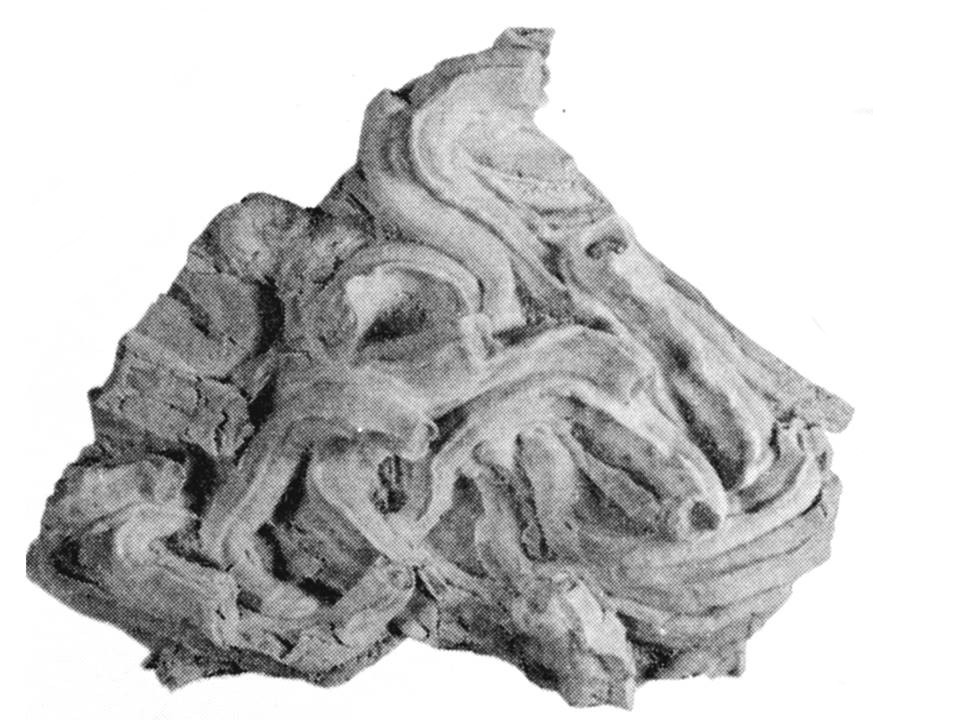
It has been a long time since I have posted a new mystery fossil. I will kill two birds with one stone today by revisiting a type of fossil that I have shown before, but for which I neglected to provide some specific Arkansas detail. See if you can figure out what this is and tune back in Friday to find out what I didn’t say last time.
The Very Definition of a Modern Major Researcher
Now that Labor Day has come and gone, everyone should be back to school by now. I have been absent for much of the summer and not posted nearly as much as I had hoped to. I have been working on some projects which I hoped to have up by now, but are still in process. Working two jobs right now while trying to maintain some semblence of a personal life has left me precious little energy to work on Paleoaerie. But hopefully, that should end soon and I will be back to posting on a regular basis.
In the meantime, there are some news and upcoming events I would like to share so you can put them on your calendar.
- I have received the audio for my talks at the Clinton Presidential Library. Unfortunately, the video was not successful. So as soon as I get the chance to sync the audio to the powerpoint, I will post it here.
- I have joined forces with TIES, the Teacher Institute for Evolutionary Science, sponsored by the Richard Dawkins Foundation for Reason and Science. They have a number of excellent resources on their webpage and will allow an improved opportunity to offer workshops on evolution to teachers and other interested parties. These workshops are designed by teachers for teachers and are aligned with the Next Generation Science Standards. If you are interested in a workshop, please either contact me or Bertha Vasquez, the TIES Director. You can also find them on Facebook and Twitter.

- I will be appearing at the Forest Heights STEM Academy in Little Rock on Friday, September 11, to discuss how the scientific method is really used by scientists.
- I will be appearing at the next quarterly meeting of the Arkansas STEM Coalition meeting on September 25 to talk about TIES and National Fossil Day.
-
NFD_2015_Oval
Speaking of National Fossil Day, make sure to put Saturday, October 17th on your calendar. The Museum of Discovery is hosting the second annual National Fossil Day event, even bigger and better than last year. Don’t miss it. National Fossil Day is a part of Earth Science Week, sponsored by the American Geosciences Institute, designed to “help the public gain a better understanding and appreciation for the Earth Sciences and to encourage stewardship of the Earth.”

Now that all the business is out of the way, I will get on with more educational material. In honor of everyone going back to school, I thought I would start a few posts about some definitions that most people generally get wrong. Today, I am going to discuss a few of the types of scientists that study past life.
 Whenever a scientist tells people they are an archaeologist or paleontologist, they tend to brace themselves for the almost invariable questions about the other field. In most people’s minds, all the different sciences seem to be interchangeable, with little understanding that just because someone studies the past, they don’t necessarily study everything in the past. I won’t even get into the difference between scientists who study past life and historians. I will leave that for any archaeologists who wish to tackle that issue. I get this question so often that I bought this Tshirt.
Even though we all study past life, there are important differences. Here is a Venn diagram I created that may help explain how they differ.

As you can see, there are two main divisions in scientists who study past life: those who study humans and those who study everything else.
Anthropologists study humans, so don’t ask them about dinosaurs or mammoths or giant sharks. Don’t bring them a fossil you found. If you find a pottery shard or an arrow head, find an anthropologist. If you found a book, you might also try a historian. Ok, I said I wouldn’t get into this, but maybe just a little bit. Historians deal with written human history. So one might say that historians are a subset of anthropologists, in that they only deal with relatively recent anthropology. Many would also argue that they should not be included at all because they do not approach the endeavor with a scientific approach. While I can see the point, I can also see the point that this would also include many anthropologists, so comes across as sounding like the argument about can bloggers be considered journalists. The correct answer is that it is not as simple as that. But it’s not my field and my view of the topic is strictly as an outsider.
Paleontologists study everything that does not include humans. So please feel free to ask us about extinct organisms, as long as they don’t make pottery or arrow heads.This doesn’t mean to say that every paleontologist studies all extinct organisms. There are innumerable specialities within the field. If you ask a paleoclimatologist to identify a bone, he won’t have a clue what you are talking about. They study past climates, not bones. Just like one wouldn’t ask a podiatrist (foot doctor) to do brain surgery, don’t expect an expert in Pleistocene pollen to help you identify which type of trilobite you have, although I expect they could tell you that you do indeed have a trilobite.
But what do you do if you find a fossil of a hominid, something not quite human, but not quite an ape? That is where paleoanthropologists come in. They deal with that intersection between paleontology and anthropology, where the lines blur into shades of grey. In point of fact, all these terms are arbitrary boundaries and only serve to help us break up the studies into something manageable. Like everything else in nature, we have taken a continuous spectrum and cut it into defined sections to satisfy our need to categorize everything.
Even though there is far more life that is not human than there is that counts as human, for obvious reasons. The study of humans is more discussed than anything else. So while it is not my field, i will attempt to separate the major divisions within anthropology. Anthropologists, as mentioned study anything to do with humans. This can be broken down into two main categories. Physical anthropologists study the biology and evolution of humans. If you have human bones, they are the ones to talk to. Cultural anthropologists study human culture, their behaviors, what they make, how they interact with others. If it’s not a bone, but related to humans, ask a cultural anthropologist.
But what then are archaeologists? Do they not do the same thing as anthropologists? Yes, because they are anthropologists. They are just a subset that happens to be so well known that many people lump archaeologists and anthropologists together as if they are the same thing. But they aren’t, not quite. All archaeologists are anthropologists, but not all anthropologists are archaeologists.
Archaeologists study past human life through physical remains. Thus, they include some of both physical and cultural anthropology. They are the ones to talk to about pottery shards, arrow heads, and the like. Any physical evidence of a preexisting culture could be brought to the attention of an archaeologist. However, anthropologists cover a lot more ground, so to speak. There are cultural anthropologists that study current, existing culture. This is in fact a large field within cultural anthropology. There are even physical anthropologists that study evolutionary changes taking place within humans right now. Neither of these would count as archaeologists though.
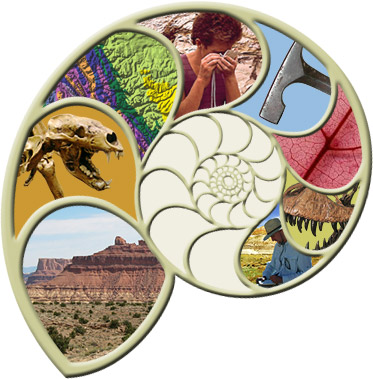
Just as in anthropology, as I mentioned earlier, there are several different subspecialties within paleontology. Here is how the University of California Museum of Paleontology breaks it down.
Paleontology is traditionally divided into various subdisciplines:
Micropaleontology:
- Study of generally microscopic fossils, regardless of the group to which they belong.
Paleobotany: Study of fossil plants; traditionally includes the study of fossil algae and fungi in addition to land plants.
Palynology: Study of pollen and spores, both living and fossil, produced by land plants and protists.
Invertebrate Paleontology: Study of invertebrate animal fossils, such as mollusks, echinoderms, and others.
Vertebrate Paleontology: Study of vertebrate fossils, from primitive fishes to mammals.
Human Paleontology (Paleoanthropology): The study of prehistoric human and proto-human fossils.
Taphonomy: Study of the processes of decay, preservation, and the formation of fossils in general.
Ichnology: Study of fossil tracks, trails, and footprints.
Paleoecology: Study of the ecology and climate of the past, as revealed both by fossils and by other methods.
Each one of these can be broken down into even more specific specialties. Paleoecologists can specialize in biogeography, limnology, pedology, tempestology, schlerochronology,and many others. Vertebrate (and invertebrate) paleontologists can specialize in taxonomy, systematics, functional morphology, etc., but I think you get the point. There is far more that can be studied by any individual. paleontology, like any other science, is a team sport.
There are no hard and fast boundaries between these of course. Vertebrate and invertebrate paleontologists can and do study taxonomy, biogeochemistry, paleoecology, and taphonomy, and others all at the same time. Paleontology is highly interdiscplinary and requires knowledge in a lot of different fields. But many scientists tend to spend most of their time in a specific area.
So if you have a question, you will get the most detailed answers from someone in the right specialty. Choose wisely and you will get your questions answered. If you don’t, go to grad school, discover them for yourself and let everyone else know about it.
Animal Crosses Redux
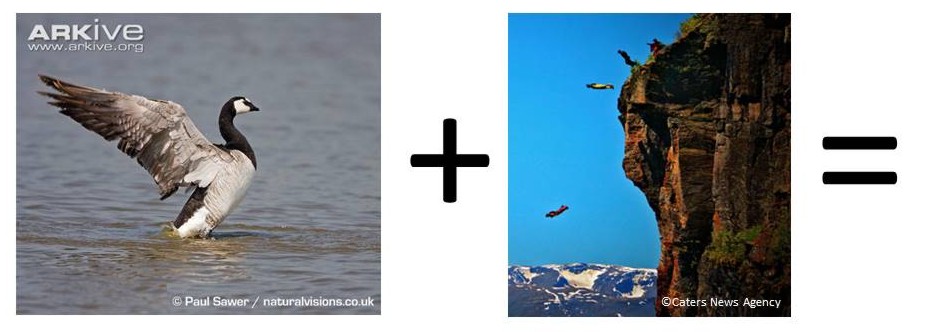
it is truly amazing how easy it is to completely fall out of a routine if you break it for any stretch of time. Fortunately, or unfortunately, it is also often just as easy to fall back into it. in this case, I am hoping it will be easy to get back into writing for Paleoaerie after my unexpected extended break. There is much that will be coming as soon as I can. most notably the recordings of talks I gave at the Clinton Presidential Library in Little Rock, AR in the past month or so. One is on engineering a dinosaur, given just in time for the opening of Jurassic World. Speaking of Jurassic World, it is a great monster movie, as long as one is not looking for accuracy in its dinosaurs. But as the geneticist in the movie states, the real dinosaurs would have looked considerably different, but they wanted bigger, scarier, with more teeth. The other talk is on Arkansas fossils and why we need a natural history museum in Arkansas.
For now, I will just leave you with this puzzle. The pictures represent one of my favorite extant animals, simply because their young are so incredibly amazing. Leave your guesses in the comments section and stay tuned for the answer.
Website Full of Fossils
Southwest Arkansas has a lot of Cretaceous rocks. During that time, Arkansas was right at the border of the Western Interior Seaway. As such, one can find a lot of marine fossils from the dinosaur era, including mosasaurs, elasmosaurs, oysters by the millions, clams, shark teeth, and much more. You can also find shoreline fossils, such as thousands of dinosaur footprints and the occasional bone.
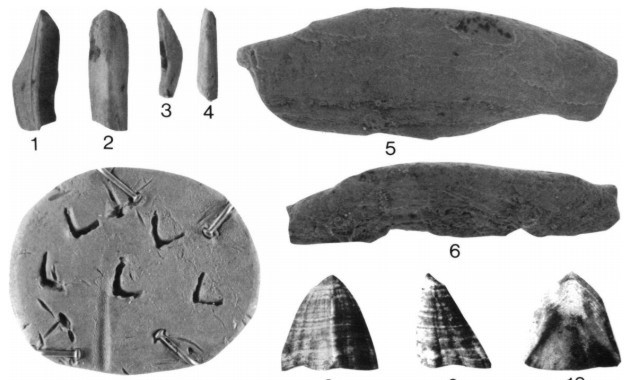
 If one crosses the border into North Texas, one can find a lot of fossils that are similar to the southwest Arkansas marine fossils. There is a website, called txfossils.com, a Texas resident has put up showing lots of pictures of the fossils found in the area. The pictures are divided into several categories. The first category is for cephalopods, which are mostly ammonoids. They are listed as ammonites, but they are mostly goniatites from what I can tell, although I can not see the suture patterns (the septa, or walls, between body chambers) well enough and most of them to say for sure. Even though most people refer to the entire group as ammonites, ammonites comprise a single subgroup with the larger group called ammonoids known for complex body septa. Goniatites have a simpler wavy pattern. Nautiloids comprise the third group and are known for simple curves forming the septa.
 The other categories include gastropods (snails), echinoids (sea urchins), bivalves (clams), coral and bryozoa, petrified wood plants, and bones from vertebrates. The vertebrate bones include a varitey of shark teeth and some teeth from Enchodus, the “fanged herring”. There are also what appear to be turtle shell fragments and some random bits of bone I cannot identify.
There are lots of pictures (the two shown here are from the website) which should give you some idea what you are looking at if you go fossil hunting in southwest Arkansas. Enjoy. As always, if you find any vertebrate material, please let me know. If you find invertebrate fossils you would like identified, your best bet is to contact Rene Shroat-Lewis at the University of Arkansas at Little Rock or Angela Chandler at the Arkansas Geological Survey.
Happy New Year!
Happy New Year and welcome to 2015! I know it is after January 1st, but this is the first workday of the new year for many people. It is the time that we are putting aside holiday treats and adding to our productivity rather than our waistlines. Paleoaerie is returning after the holidays to supply more dinosaur and evolution fun facts and educational materials.

This is just a short post to get things rolling for the new year. The next post later this week will have the second half of the Aliki books. Next week will kick off another round of Mystery Monday fossils. After that, there will be many a topic to discuss. If you have anything in particular you would like to have discussed or would like to contribute as a post, please feel free to let me know. let’s make this year one of increased collaboration and sharing, exponentially increasing the fun and learning.
Happy Holidays!
This will be the last post of the year. This year we have looked at four books, a couple of movies, 12 websites, three evolution myths, 34 fossil organisms, and a few miscellaneous educational topics. Next year, we will start off with the second set of Aliki books. More reviews will be done, including books, videos, and websites. If you have something you want reviewed, examined, or discussed, please let me know and it will put put in the queue. We will also get back to the geology posts and get more myths covered, as well as a few posts on the best ways to teach hostile topics.
In the meantime, enjoy the holidays, whether that holiday is Christmas, Hanukkah, Yule, or just a Festive Festivus. Whatever your particular stripe, have a great time for the last week of the year and we will see you in 2015. We’re halfway out of the dark (to shamelessly steal a line).

Stepping into a Belated Fossil Friday
Were you able to figure out what last Monday’s fossil was? It is on display at Mid-America Museum in Hot Springs, AR. Ordinarily this would have been posted last Friday, but real life intervened. Apologies for that. Part of what happened was that when I posted the original picture last Monday, I thought I understood the background behind the fossil. It turns out that new research was published in 2013 that changed a lot of the more detailed interpretations. It didn’t change anything of importance to anyone not obsessed with details, but it sent me on a three day search for answers.

What we are looking at here is a foot print of a sauropod. Sauropods were herbivorous, long-necked dinosaurs and were the biggest animals to ever walk the earth, some of them possibly massing 50-80 tons and stretching well over 30 m (100 feet). We can’t say exactly which one made this particular footprint, but we can take a pretty good guess. If you guessed Sauroposeidon, or Astrodon, or Pleurocoelus, or Paluxysaurus, or Astrophocaudia, or Cedarosaurus, you are at least partially correct. These are all titanosaurs, a subgroup of sauropods. But which one we call it is more problematic. It is usually almost impossible to tell exactly which species made a particular track and in this case, it gets even harder because there isn’t a lot of agreement over which names are even valid.

 Before we get into that morass, what is a titanosaur anyway? Titanosaurs have been in the news recently with the discovery of Dreadnoughtus. Most people are familiar with Diplodocus and Brachiosaurus, the two iconic sauropods. These two dinosaurs are the best known representatives of the two main groups of sauropods, with many species in each group. Diplodocus had shorter front legs than back legs and was relatively thin with a long, whip-like tail. It’s head was small and elongate, with simple, peg-like teeth in the front of the jaws. Brachiosaurus had longer legs in front than in back and was stockier, with a shorter, stubbier tail. It’s head was larger, with spoon-shaped teeth. Titanosaurs had front legs that were roughly the same length as the back legs, with a relatively whip-like tail like Diplodocus, although not thought to be as long. The heads looked like Brachiosaurus, but more elongate. Some had teeth like Diplodocus, some like Brachiosaurus. Basically, if you try to envision an intermediate form between Brachiosaurus and Diplodocus, you would wind up with something that looked like a titanosaur, which is rather interesting because all the studies trying to figure out their relationships place titanosaurs as much more closely related to brachiosaurs than to diplodocids. In fact, titanosaurs likely evolved from early brachiosaurids, which means that all the characteristics that make them look sort of like diplodocids are examples of convergent evolution, if the hypotheses about their relationships are correct.

The titanosaur Argentinosaurus. Wikipedia
What’s in a name?
Now that we know basically what we are looking at, what do we call the one which may have made this track? That is an excellent question. Two different trackways have been found in Arkansas, both in a commercial quarry in Howard County. They were fantastic finds, with thousands of tracks (5-10,000 tracks in the first trackway alone), placing them among the biggest dinosaur trackways ever found. Unfortunately, other than a few tracks that were spared, they no longer exist as they were destroyed by the quarry operations. That is a sad loss for paleontology, but in defense of the quarry owners, the tracks were found on private land and the owners had no legal requirement to tell anyone about them at all, they are running a business after all. They allowed scientists to study the trackways and in the case of the second trackway, they approached scientists at the University of Arkansas at Fayetteville about the tracks on their own initiative, giving them the opportunity to study the tracks before they were destroyed. As a result, careful maps were drawn, some tracks were removed and others were saved as casts. So the trackways themselves may be gone, but the knowledge of them is still with us and in the public domain.
The tracks were initially described as being from either Astrodon or Pleurocoelus, based on the fact that fossils from these dinosaurs have been identified in Oklahoma in rock units called the Antlers Formation, which is correlated with the Trinity Formation in southwest Arkansas. However, some researchers have concluded that the material upon which these names are based can not be reliably distinguished from any other titanosaur, so the names are what is called nomen dubium, literally dubious names. Pleuocoelus became what is commonly referred to as a junk taxon, which are used as a waste basket for material not identifiable as something else. In this case, when people found bits of a titanosaur in the southern United States they couldn’t identify, they said, it’s um…uh…Pleurocoelus? Pleurocoelus! Yeah! That’s the ticket! In 2013, Michael D’Emic published his research in which he found that part of the material identified as Pleurocoelus are really from two different sauropods called Cedarosaurus and Astrocaudia, and other parts are from a Texan sauropod called Paluxysaurus, leaving other bits unidentifiable as anything other than indeterminant titanosaur. Additionally, he found that Paluxysaurus was simply a juvenile form of Sauroposeidon, a giant sauropod known from four huge cervical (neck) vertebrae found in Oklahoma. So in conclusion, what can we say about the tracks? They were made by a titanosaurid sauropod.
Life’s a Beach
The first trackway was found by Jeff Pittman in 1983 while he was working in the quarry for his master’s degree at Southern Methodist University (SMU). The second set was found in 2011 by quarry workers, who brought it to the attention of Stephen Boss, a geologist at the University of Arkansas at Fayetteville. The tracks in the first trackway were 12-24″ across and were interpreted as being from from adult sauropods. The other trackway was more diverse, with tridactyl (three-toed) footprints attributed to the giant carnivorous dinosaur Acrocanthosaurus, as well as tetradactyl (four-toed) tracks which may have been made by a crocodilian of some sort. The pictures below are of the first trackway, taken by David Gillette, and can be found at his site discussing Seismosaurus.


The rocks in which both of the trackways were found is in what is called the DeQueen Limestone, a subunit of the Trinity Formation. These rocks were laid down in the Early Cretaceous about 115 to 120 million years ago. At the time, the shore of the Gulf Coast went through Arkansas, so much of southwest Arkansas was underwater. The DeQueen Limestome has thin layers of sandy limestone, many of which are quite fossiliferous, with oyster shells in abundance. There are also layers of limy clay and gypsum, indicating the air was fairly hot and dry. Stephen Boss likens the environment at the time to be similar to the Persian Gulf of today. So what we have is the coast of a very warm shallow sea. The dinosaurs appear to have been using the area as part of a migratory pathway. So while no bones of these dinosaurs have been found in Arkansas yet, we know they were here, so keep an eye out when you are fossil-hunting in southwest Arkansas. Who knows, you might find something bigger than you imagine.

Depiction of the environment during the formation of the trackway. Mark Hallett. http://www.columbia.edu/dlc/cup/gillette/gillette19.html
Myths and Misconceptions: The Transition From Water To Land Is Ridiculously Hard
It is commonplace to hear people say they do not accept evolution because they don’t see how some of the changes could have taken place. It’s just too complicated they say. What use is half a wing, they ask. As it turns out, the usefulness of half a wing, even a featherless baby wing, has been demonstrated, so that argument is out. Another transition people have difficulty with is the transition from water to land. Regardless of the fact that we have a good bit of fossil evidence demonstrating the transition, many people think that fins and feet are so radically different that they don’t see how it could have happened. Recent research has demonstrated in several ways that this transition is not nearly as hard as people might think, which may explain why it has happened multiple times in the history of life. For a truly bizarre history, one can look at the evolution of the elephants. Before they were elephants, they went from water to land back to the water, then back to the land.

Tetrapod phylogeny showing a few of the important fossils from The Tangled Bank, by Carl Zimmer
So what tells us it really isn’t that hard? Let me introduce you to the robot salamander. This robot and its predecessors were designed to test different models of neural circuits involved in locomotion. What they found is that the same movements of the limb and torso allowed both swimming and walking. The only difference was the amount of resistance placed on the feet. Obviously, the ground supplied much more resistance to the limb motion than did the water. This caused a change in the neural signal, causing it to slow down and become stronger to account for the change in muscle power needed and the reduced speed of the movement. It was the same signal from the brain, it activated the same motor pathways. In other words, fish already had the neural pathways to be good salamanders.
Still, there are all the changes needed in the musculature and bones that surely had to be problematic. Research that has only recently been published indicates this isn’t hard either. Bichirs are a type of fish that regularly flops about on land and has true lungs. Emily Standen wanted to see what would happen if a bichir was raised on land and not free-swimming in the water. What they found was that the bichir changed how they crawled about, adopting a pattern that was more efficient. They held their heads higher off the ground and brought their fins closer to the body. More than simple behavioral changes, their skeletons changed as well. The supporting their pectoral fins changed subtly in ways that bore similarities with fossil of the earliest “fishapods”. It should also be noted that these experiments were on juvenile bichirs who were less than 70 days old and only lasted for eight months. This is not a lot of time to see differences.
I want to be clear that the bichir experiments do not show evolution of the fish. Evolution does not occur within a single individual. What we see here are epigenetic changes, not involving changes in the DNA. Epigenetic changes demonstrate developmental plasticity, the range over which a species can adapt to new environments without needing genetic alterations. But we now know that epigenetic changes can be passed on to the next generation in processes that are still only dimly understood. Unless these changes become incorporated into the DNA, they will fade if taken out of the environment that is producing the selection for that change. But eventually, these sorts of epigenetic changes can lead to real DNA changes that will lock in the change for all further descendants. In other words, what these experiments demonstrate is that fish already had the necessary developmental plasticity to evolve adaptations to land.

A rather extreme version of syndactyly. http://www.jisppd.com PMID: 21273726
As I stated, these sorts of changes have to be incorporated into the DNA, but surely that requires a lot of changes? There have to be a lot of genes that have to be changed radically, right? Turns out, no. The switch is rather simple and it doesn’t even involve changes to protein-producing genes. All it takes is a change in the regulation of those genes. Change the developmental timing, change the amount of a protein here or there, and you turn a fin into a limb. Fish and terrestrial animals use exactly the same genes to make fins and limbs. They just change how they use them. This is why you occasionally get people born with webbed hands and feet. It can even cause polydactyly, having more than the normal number of fingers or toes.

Left column shows the control animals showing normal fins. The right column shows the bichir raised on land. Standen et al. 2014.
A study published in 2012 looked at the regulation of hox genes, the genes involved in controlling the shape of our bodies, how our limbs are made, how many fingers we have, that sort of thing. All animals have them, they just vary in how many and how they are used. Renata Freitas and her associates took the control sequence for Hoxd13 from a mouse and put it into a zebrafish. The only thing this did was cause the Hoxd13 gene to be overexpressed. This caused the fish to have reduced fin tissue and the growth of cartilage forming what can best be described as a rudimentary limb. Just for emphasis, let’s say that again, simply changing the amount of protein created from this one gene turned a fin into a rudimentary limb. In other words, fish already had all the genes needed to make limbs for terrestrial locomotion.
So, we’ve seen that we have a lot of fossils documenting the shift from water to land. We’ve seen that fish already had the needed neural wiring to walk, the developmental plasticity to get started, and all the genes necessary. You can even see the transition showing up in the nerves that supply the human arm called the brachial plexus, the bane of medical students everywhere, which seems bizarre and nonsensical, until one looks at it from an evolutionary perspective. Then it all makes sense. But that is a topic for another day. All the transition really took was a prolonged stimulus that provided a selective advantage for walking around and limbs developed naturally from what was already pre-existing and working fine in the environment in which they evolved. Amazing how much change can be accomplished simply by a change in venue and a little push in the right direction.
Fossil Friday, Going Swimmingly
No one guessed what the fossil for this week was. Take a look at the image below and see if you can figure out who this vertebra belongs to before continuing on after the image. As you may have deduced from the title of the post, it is an aquatic animal.


This is not the lizard you’re looking for.Platecarpus. Wikimedia.
This fossil is a really nice dorsal vertebra of a giant marine reptile. Most of the ones usually found in Arkansas are mosasaurs, but this one is different. It lived at the same time as the mosasaurs, placing it in the Late Cretaceous Period. As with all other Late Cretaceous fossils in Arkansas, it was found in the southwest corner. Specifically, it was found near Saratoga, Arkansas in Howard County by local resident Matt Smith. Interestingly, the very same spot has also turned up several nice mosasaur fossils, so it was a popular place in the Cretaceous seas. It shouldn’t be too surprising though, as it was a nearshore environment in a tropical climate much like the Bahamas today, so there would have been lots of good eating for hungry marine predators.

Elasmosaurus
Ok, enough of the teasing. The vertebra we have here is that of a plesiosaur known as Elasmosaurus. These are classic marine reptiles that most people are familiar with to some degree. They have sometimes been described as looking like a snake that swallowed a sea turtle because of the relatively wide bodies with oar-like flippers and a very long neck. They are thought to have spent much of their time slowly cruising the seaways, using their long necks to catch fish unawares. some people have even suggestd that they floated at the surface of the water with their head out of the water, so that fish could not see it, allowing them to plunge their head down into the water and catch fish from above. That is pure speculation though. Right now there is no way to really test such hypotheses, so feeding methods remain in the realm of speculation until such time as someone figures out a way to test it adequately. At the moment, biomechanical tests indicate that either method would have been possible.

Mosasaur vertebrae. Note the rounded left end.
So if you find a vertebra like this, how do you tell whether it is a mosasaur or plesiosaur vertebra? They can both be large, although the one pictured here is the largest one I have ever seen found in Arkansas. The best way to tell is to look at the ends of the centrum, otherwise known as the body of the vertebra. Most of the time, that is all that is preserved, as all the processes that stick out have been broken off, like we see in this one. Plesiosaur vertebra have flat, possibly even slightly concave, or indented ends. Mosasaurs, on the other hand, have what is known as procoelous vertebrae, which have one end convex, a bit more rounded off. These differences make mosasaur vertebrae look more like over-sized lizard or croc vertebrae, whereas plesiosaur vertebebrae look more like the disc-like vertebrae seen in fish. This may mean that plesiosaurs were more adapted for aquatic life than mosasaurs. Both were clearly fully aquatic, what with neithr one of them having legs of any sort, but plesiosaurs appear to have been aquatic for longer, giving their spine to more fully adapt.

Indeed, when we look at the age of the rocks their fossils have been found, mosasaurs are restricted to the late Cretaceous, whereas the plesiosaurs first appeared all the way back in the Triassic (another successful prediction based on evolutionary theory). This means plesiosaurs had well over 100 million years advance on the mosasaurs. It didn’t really help them in the end though. About the time mosasaurs appeared, plesiosaurs were declining. Mosasaurs evolved and spread quickly, becoming the dominant marine predator of the Latest Cretaceous. Does this mean that mosasaurs outcompeted the plesiosaurs? Not necessarily. It has not yet been sufficiently determined whether or not mosasaurs simply filled a niche left open by the plesiosaur decline or competitively excluded them. there is also the argument to be made that they would not have competed at all. The body shapes of mosasaurs and plesiosaurs are quite different, indicating they filled different niches in the marine realm, so they weren’t going after the same food sources. Therefore, there is no particular reason we know of that they could not have existed alongside each other without adversely affecting each other.


Nessie picture collection by Darren Naish, Tetrapod Zoology, July, 2013.
Most people are familiar with them due to the much discussed “Loch Ness Monster”, which has often been said to be a supposed plesiosaur that has somehow survived for 70 million years. Of course, that idea doesn’t make a lot of sense for several reasons. It is highly unlikely that plesiosaurs could have lived for so long without leaving any trace of a fossil record. It does happen occasionally though. The coelacanth is a famous example of that, for a long time having a good 65 million year gap in their fossil record. They were thought to have gone extinct along with the dinosaurs until living specimens were caught. We know more about them now and their fossil record is no longer quite as limited as it once was, but it still has wide gaps in the fossil record. But more serious problems for Nessie arise from the fact that plesiosaurs were large, air-breathing marine reptiles. Coelacanths went unnoticed because they moved to the bottom of the sea, an option not available to plesiosaurs, which were limited to surface waters, and relatively shallow waters at that. That means they lived in exactly the sort of marine environments most visited by humans. That makes it hard for them to hide from people today and puts their bones in prime spots in the past to fossilize. Then of course, there is the problem that Loch Ness is a freshwater lake and plesiosaurs were adapted for saltwater. Not to say a species couldn’t have adapted for freshwater, but it does make it less likely. Finally, there would have to be enough plesiosaurs big enough to support a breeding population and there is simply no way they could all hide within the confines of a lake, especially since they have to live at the surface much of the time.
 But what about the supposed bodies that have been found of plesiosaurs? They have all been identified as decomposing backing sharks. Basking sharks are one of the largest sharks known today. they are pretty harmless though, as they are filter feeders, much like the whale shark. When their bodies decompose, the jaws typically fall off pretty quickly. So what has been identified as the head of a “plesiosaur” was actually just the remaining portions of the cartilaginous skull without the large jaws. If you look at the picture of the asking shark here, there isn’t much left after you remove the jaws.

Next week is Labor Day on Monday, so I will likely not post a new fossil next week. I will post something next week, just not a mystery fossil. But there will definitely be one the following week, so please come back to see the next fossil and see if you can guess what it is before Friday. In the meantime, enjoy your vacation.

 paleoaerie