Home » Posts tagged 'Arkansas' (Page 5)
Tag Archives: Arkansas
Mystery Monday
Time for another Mystery Monday. This one should be easy if you haven’t been taking things too slow lately. The answer will be revealed Friday.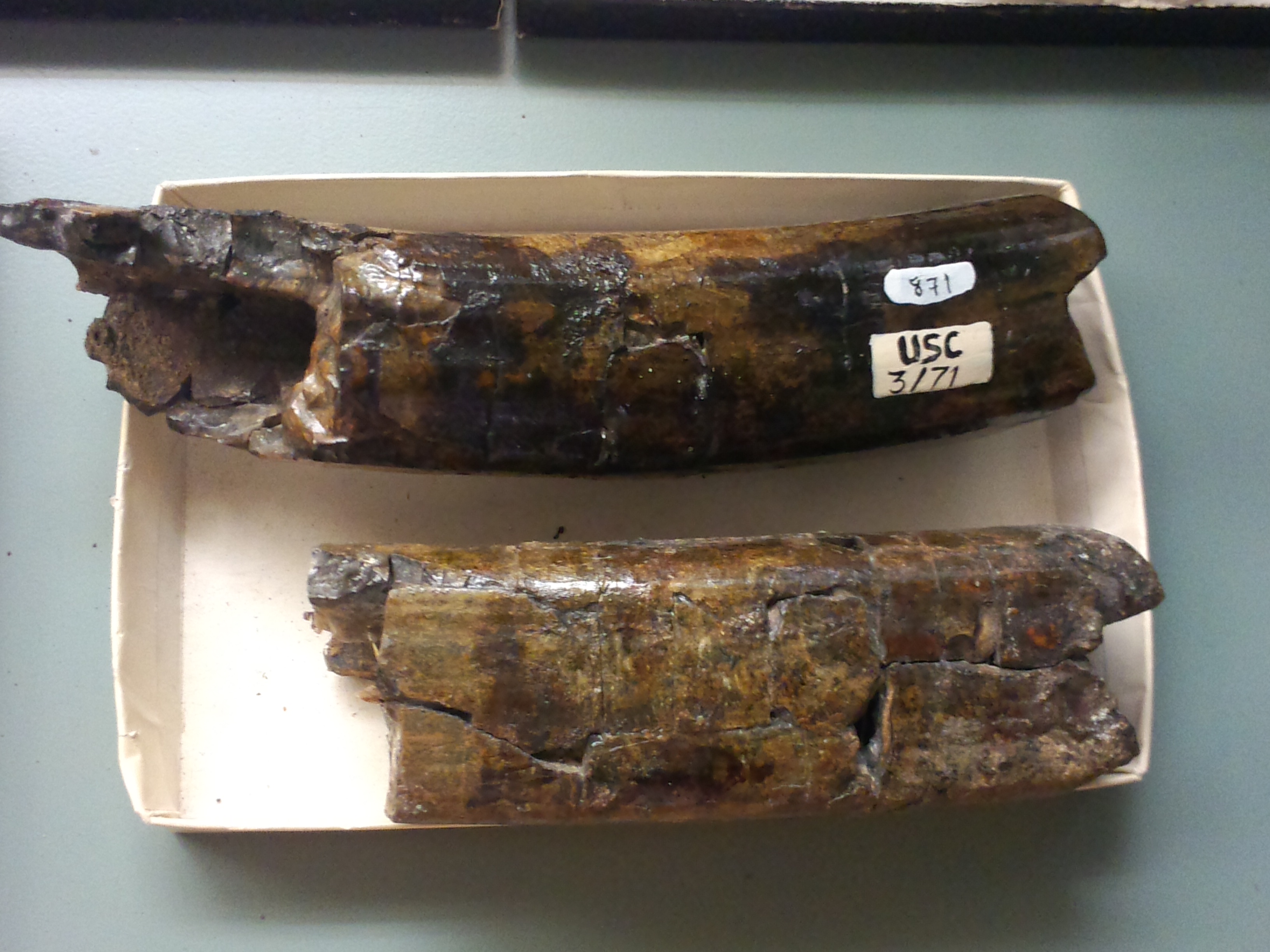
National Fossil Day Celebration at the Museum of Discovery is Tomorrow!
Tomorrow is the day to see tons of fossils at the Museum of Discovery. Come out and see what Arkansas has to offer in fossils. We have a far more diverse array of fossils than most people realize. Here are a few dinosaurs you will see.
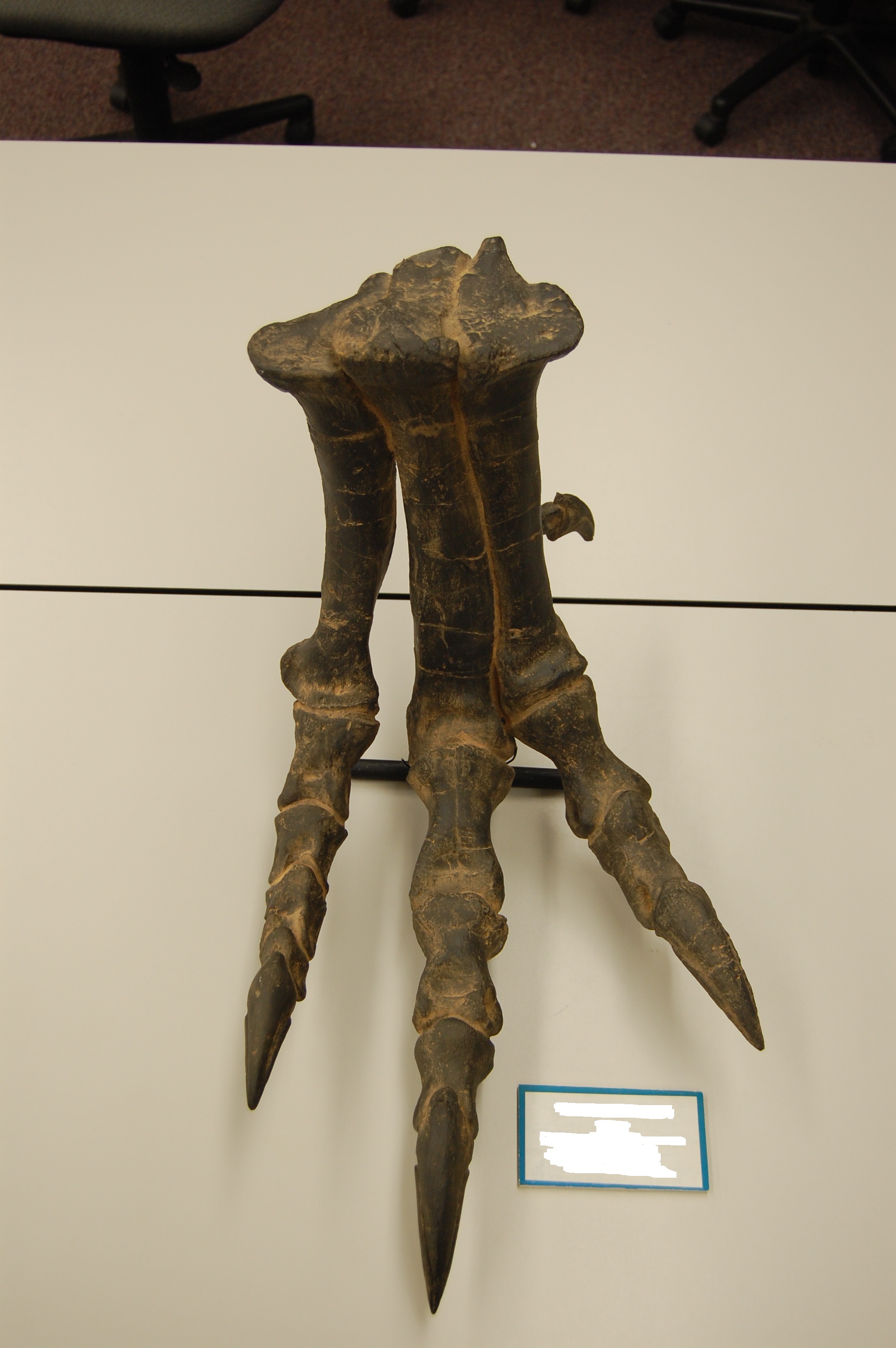
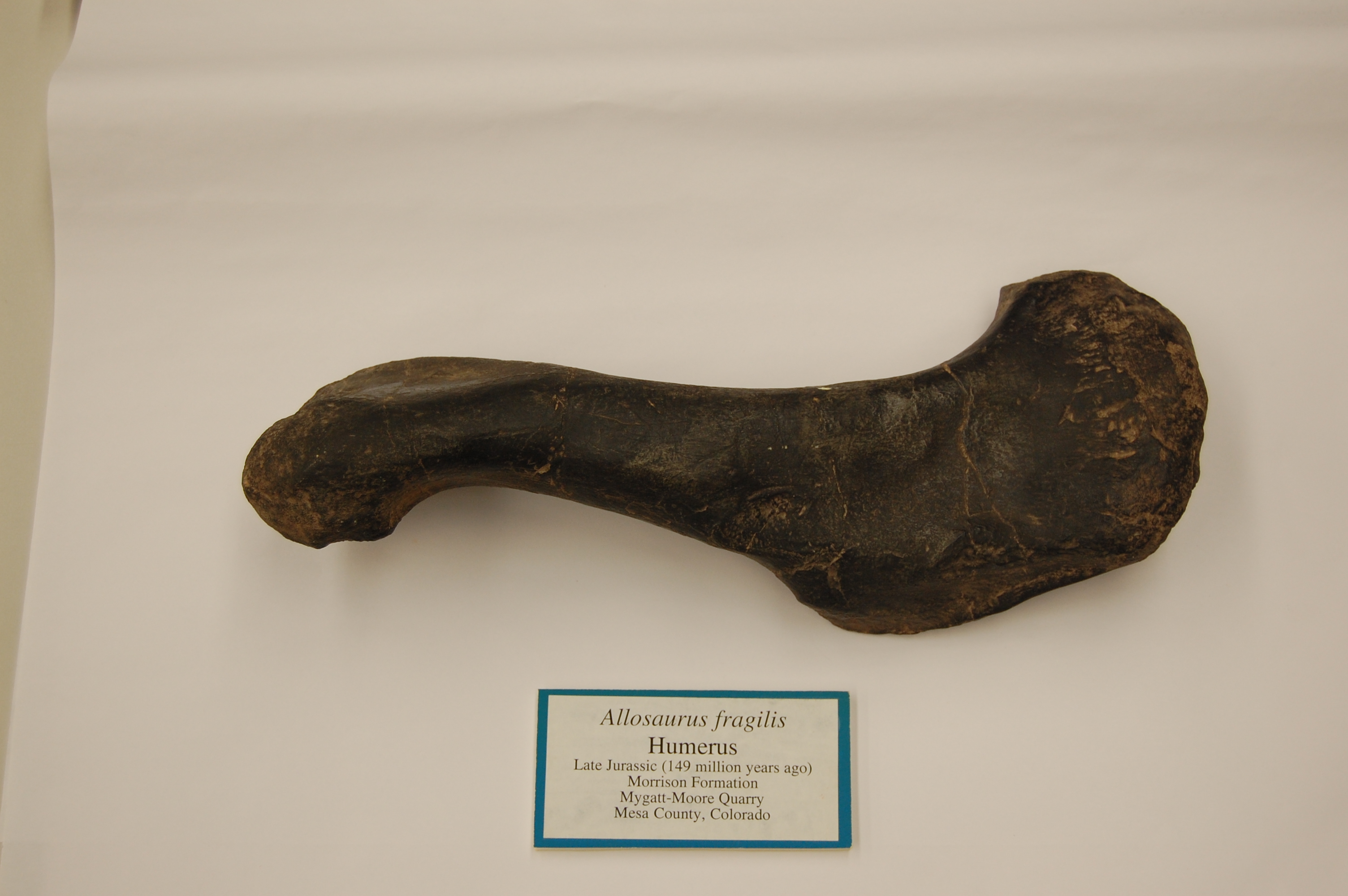
Here are some casts of Allosaurus bones, a foot and a humerus. Allosaurus itself didn’t live here, but its descendant, Acrocanthosaurus, did.
Here is an ischium of an Apatosaur, which did not live here either. But its titanosaur relatives did.
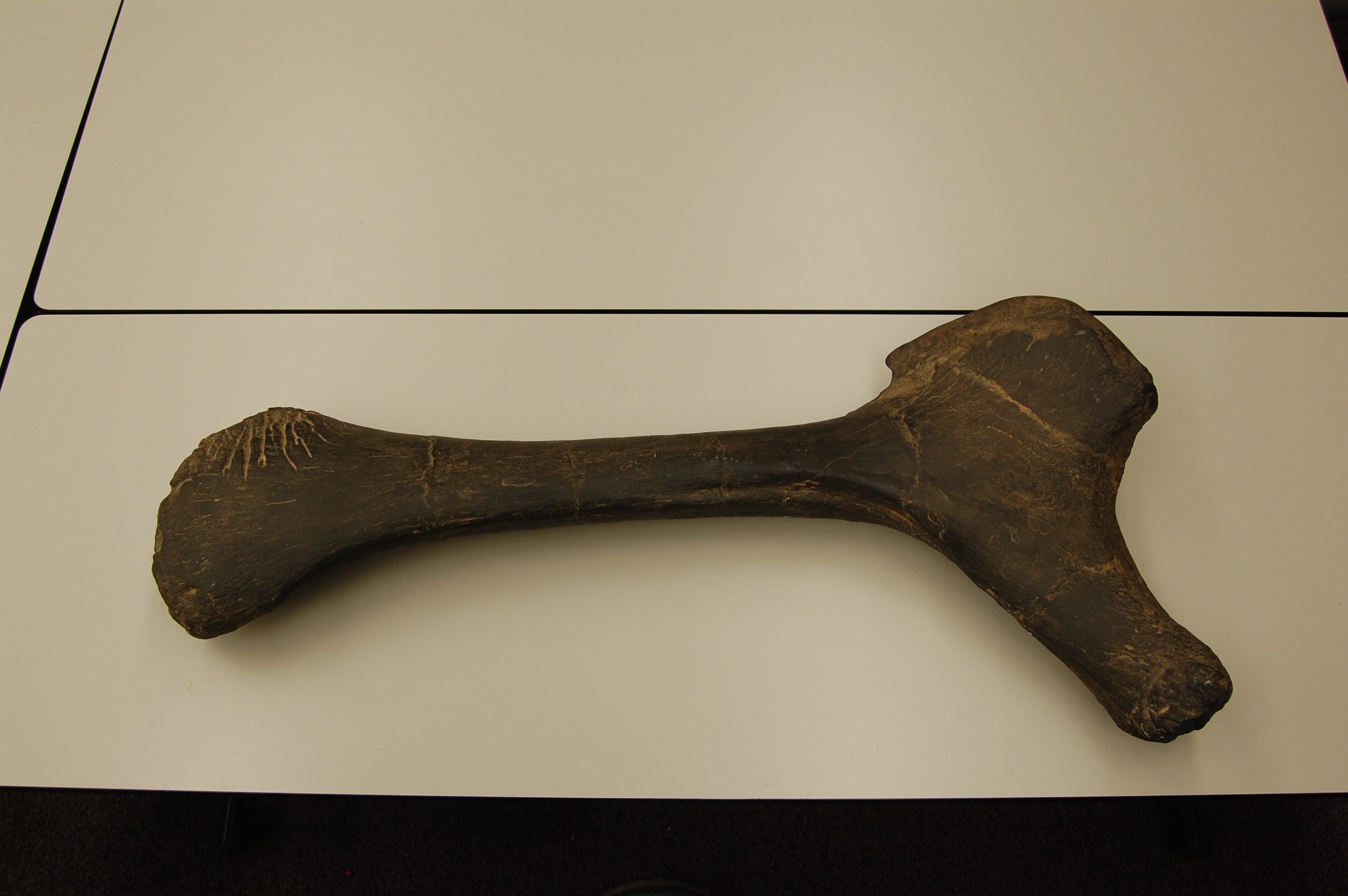
Here are some hands and claws of Allosaurus and Utahraptor, a giant version of Velociraptor.
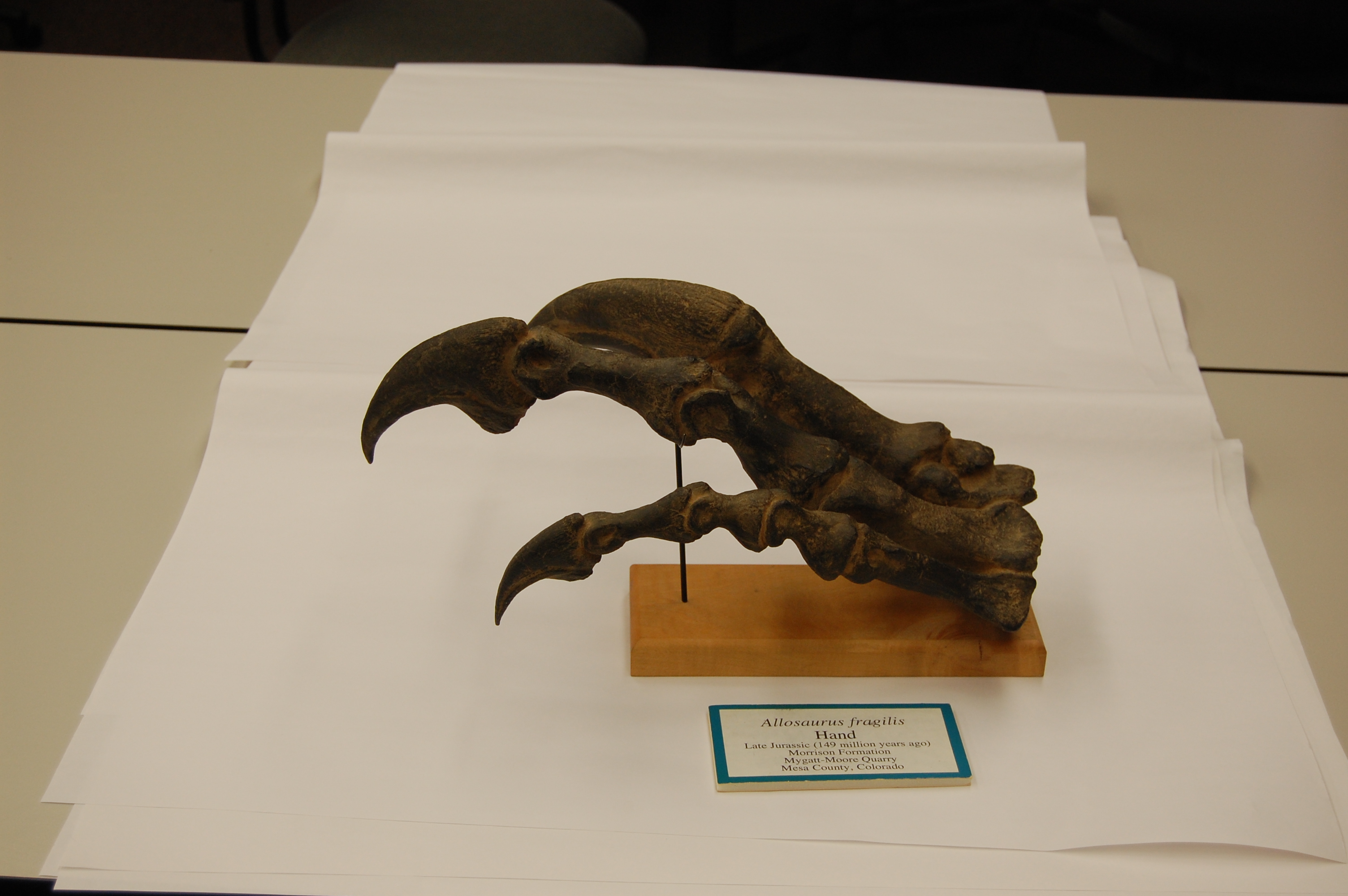

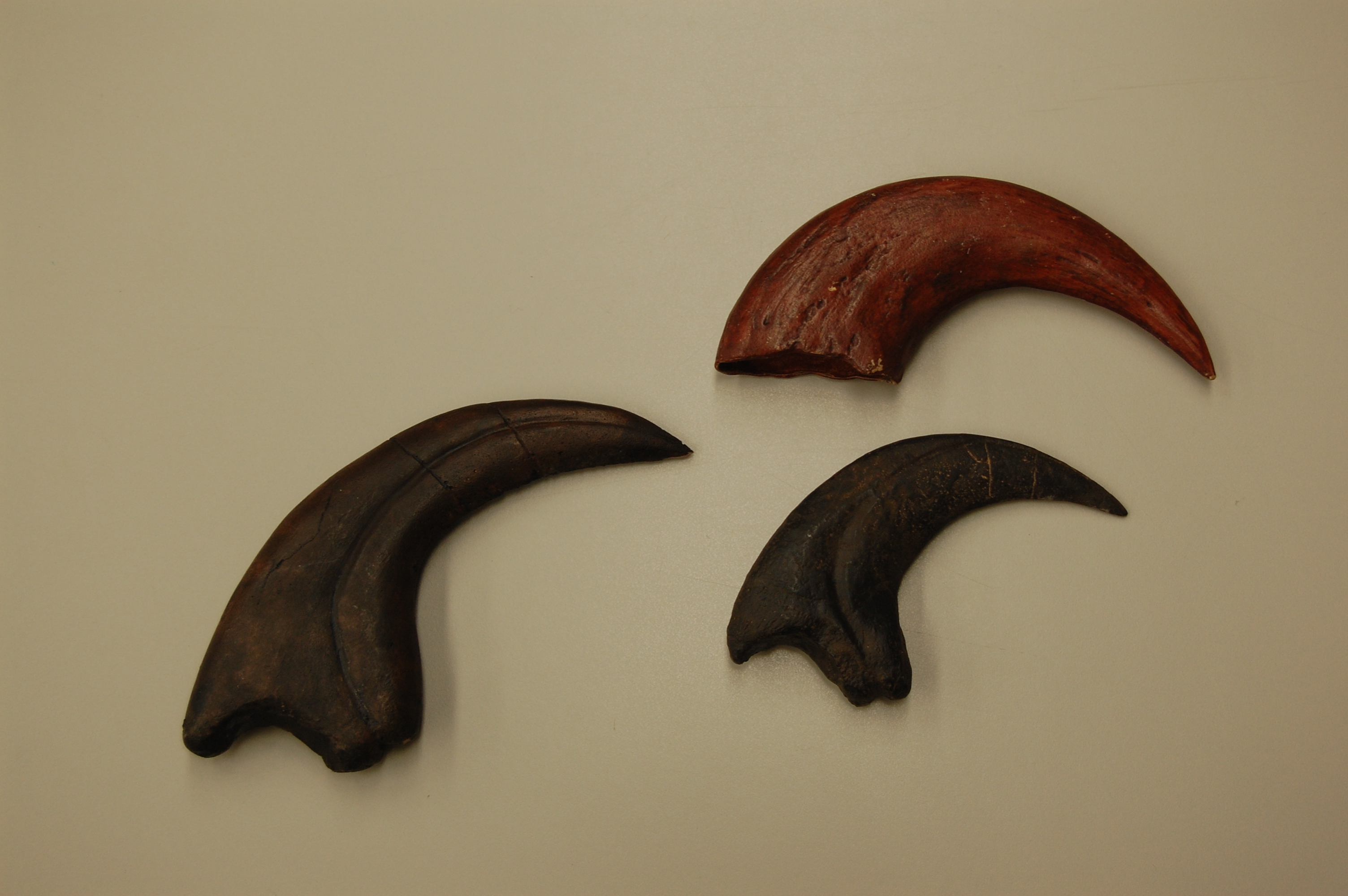
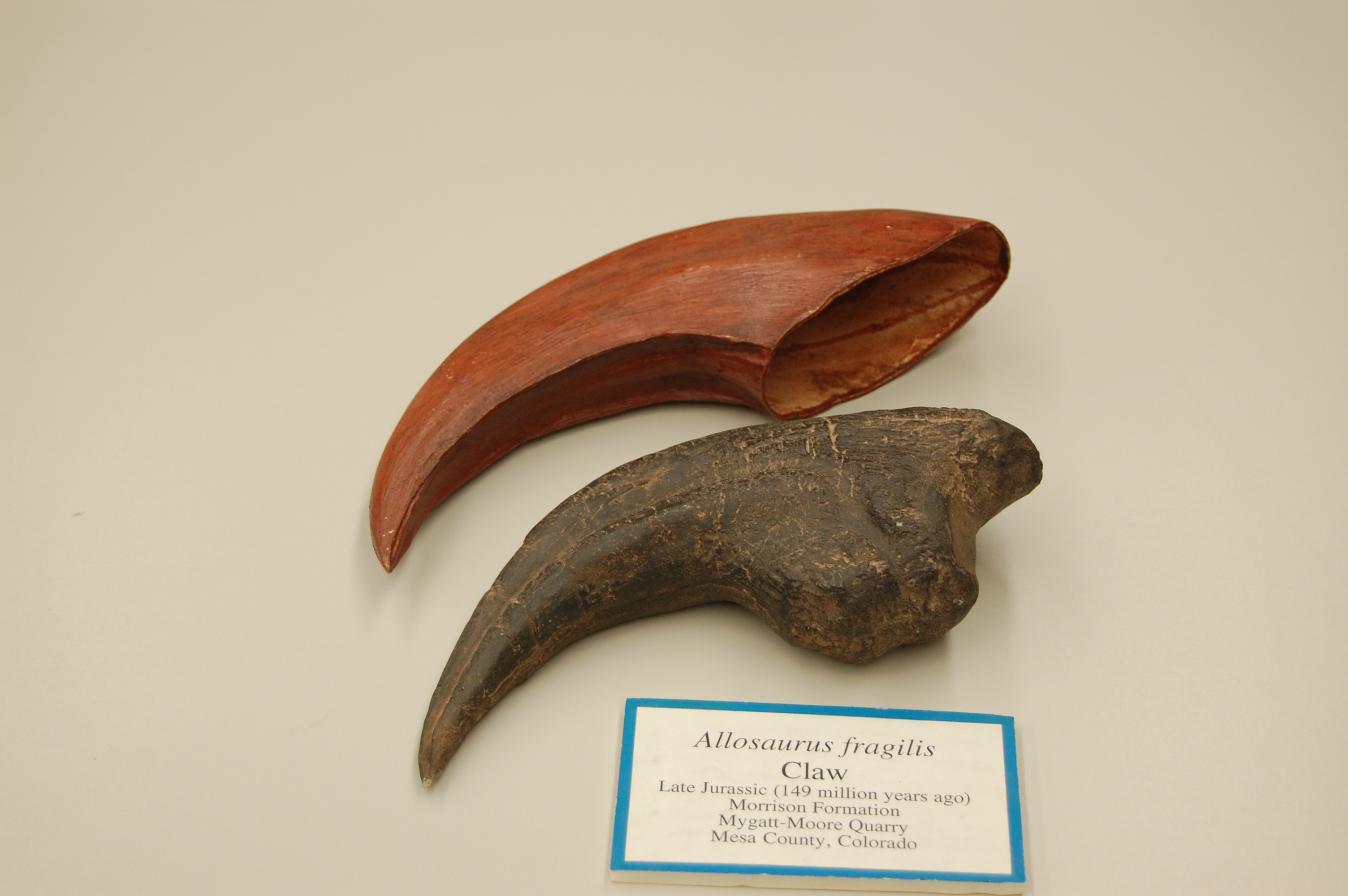
Not interested in dinosaurs? How about a Smilodon, one of the biggest and most iconic of mammalian predators?
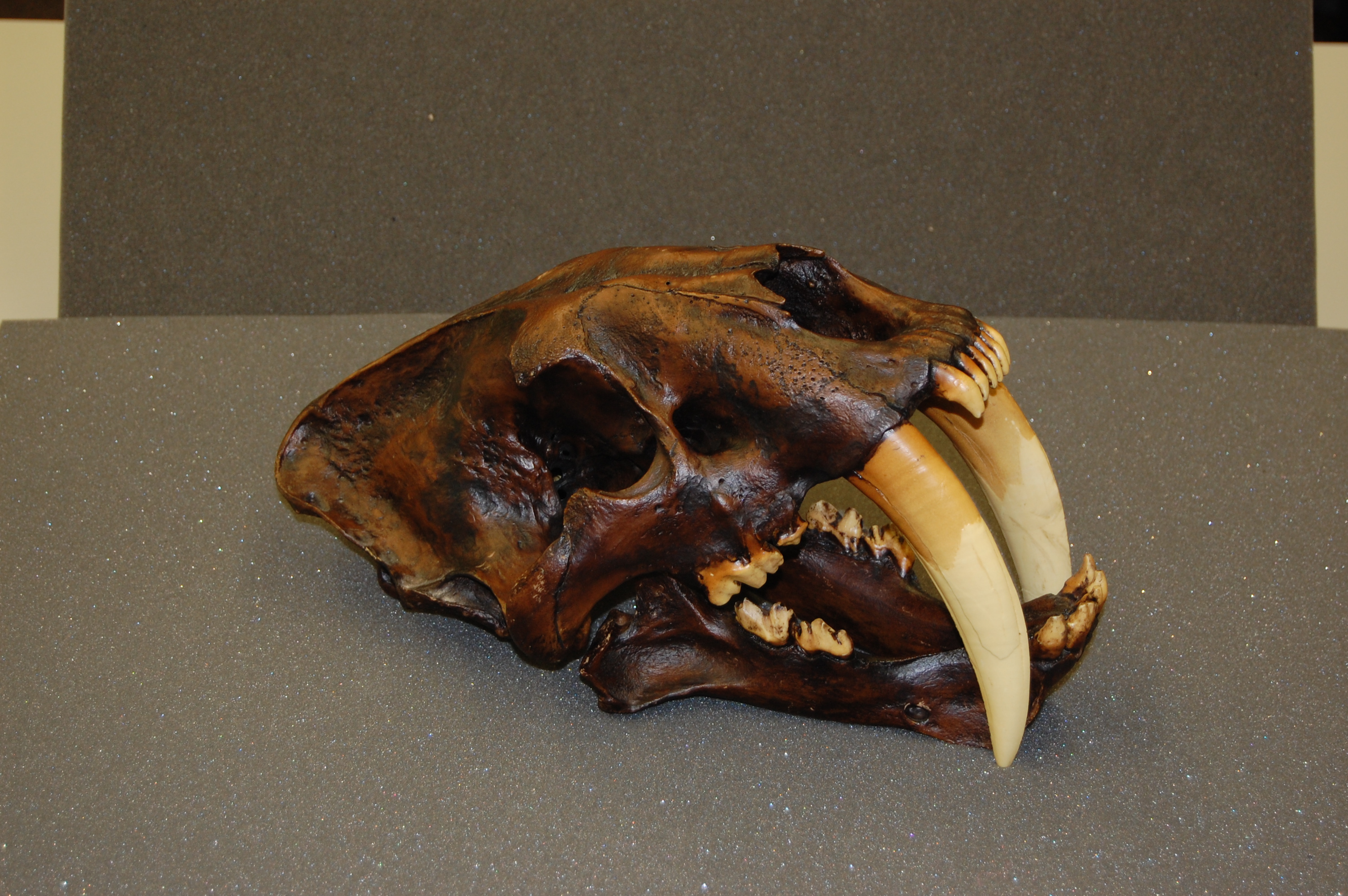
Of course, what I have shown the past few days is only a few things that the University of Arkansas Earth Sciences Department is bringing. The Anthropology Department will also be there with their own fossils. The Arkansas Geological Survey will be there with a cast of the dinosaur, “Arkansaurus” and more. The Virtual Fossil Museum will be present with more than virtual fossils. Not to be outdone, the Museum of Discovery will have a collection of dinosaur skulls on display, which will be part of an upcoming dinosaur exhibit which you won’t want to miss.
2 More Days to National Fossil Day at the Museum of Discovery
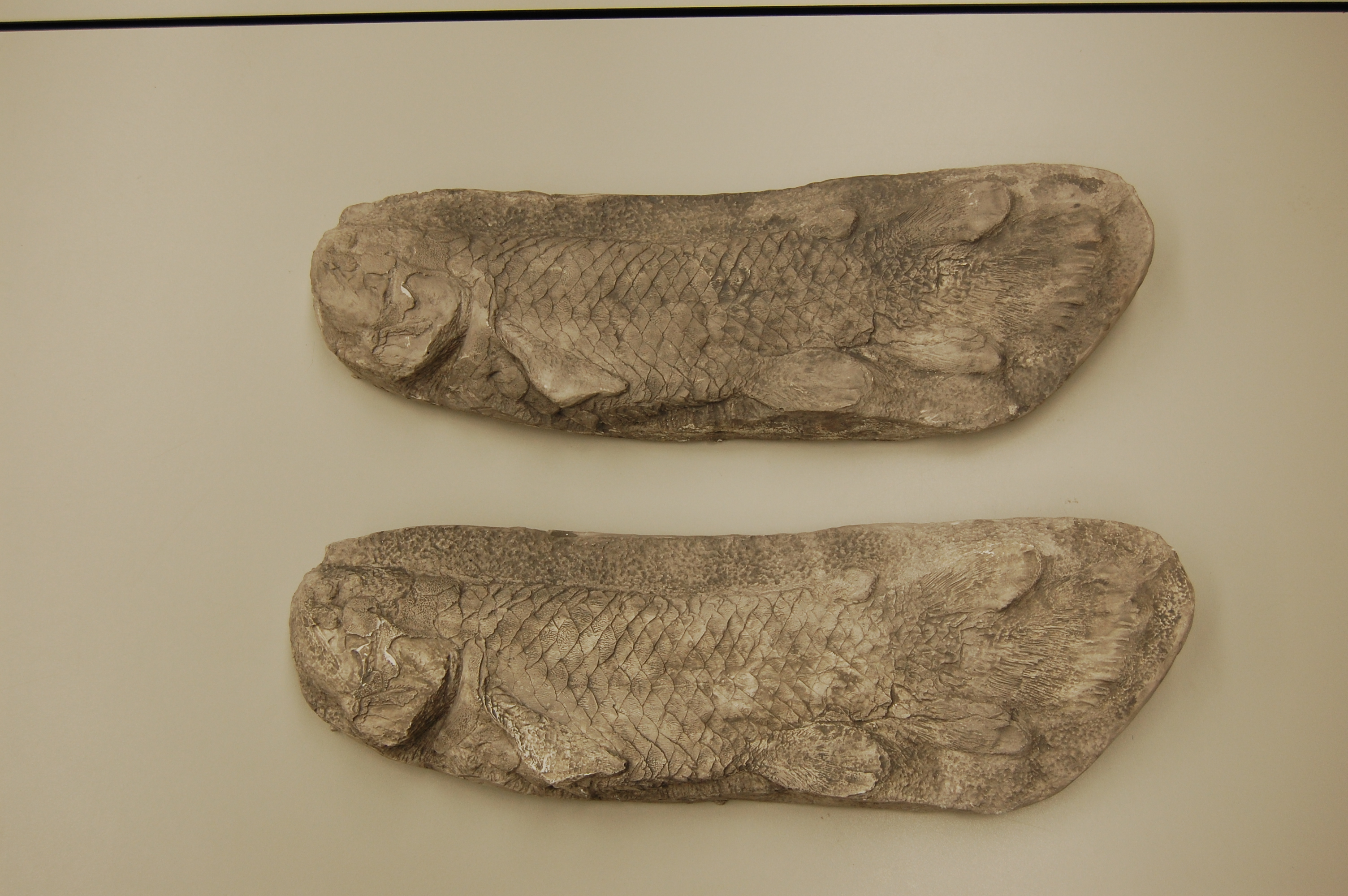
The National Fossil Day event at the Museum of Discovery is almost here.Here are a few more things you might see at the event. Here is a cast of a coelacanth, a lobe-finned fish that is closely related to the fish that started the trek onto land, and a mesosaur, an early reptile before reptiles and mammals went their separate ways.
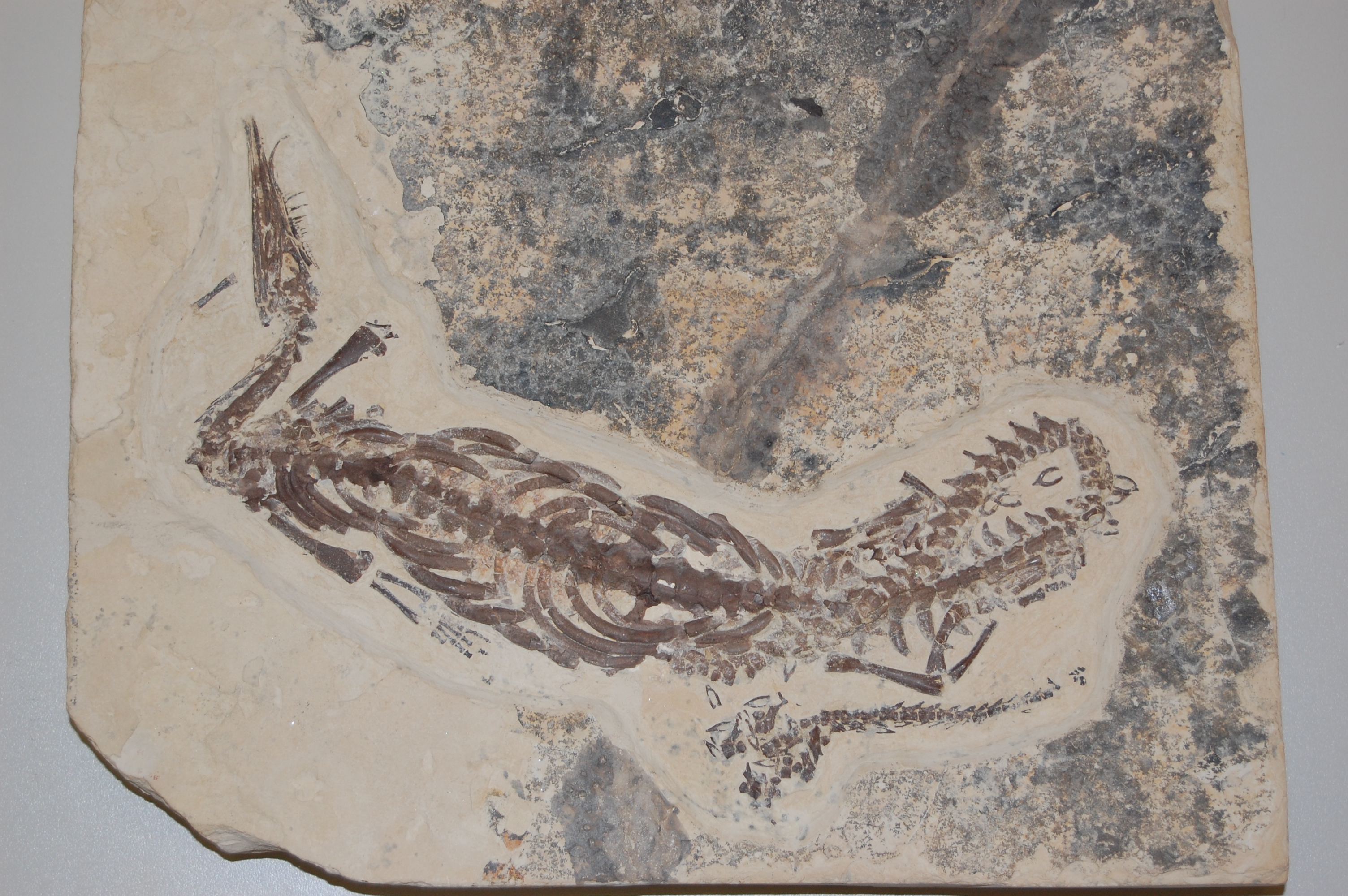
Here is a Keichousaurus, another early reptile, and Greererpeton, an early amphibian that existed before reptiles evolved.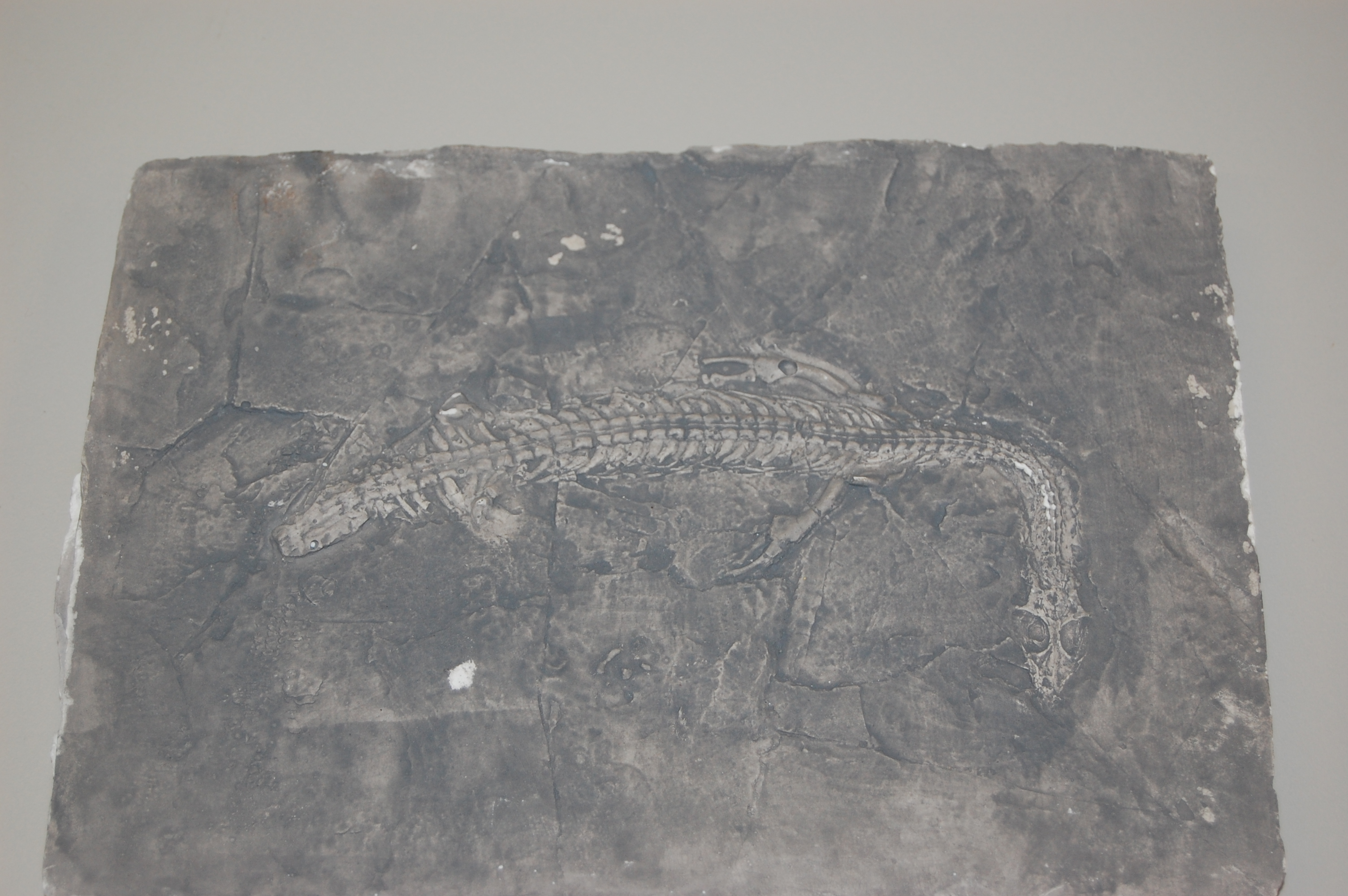
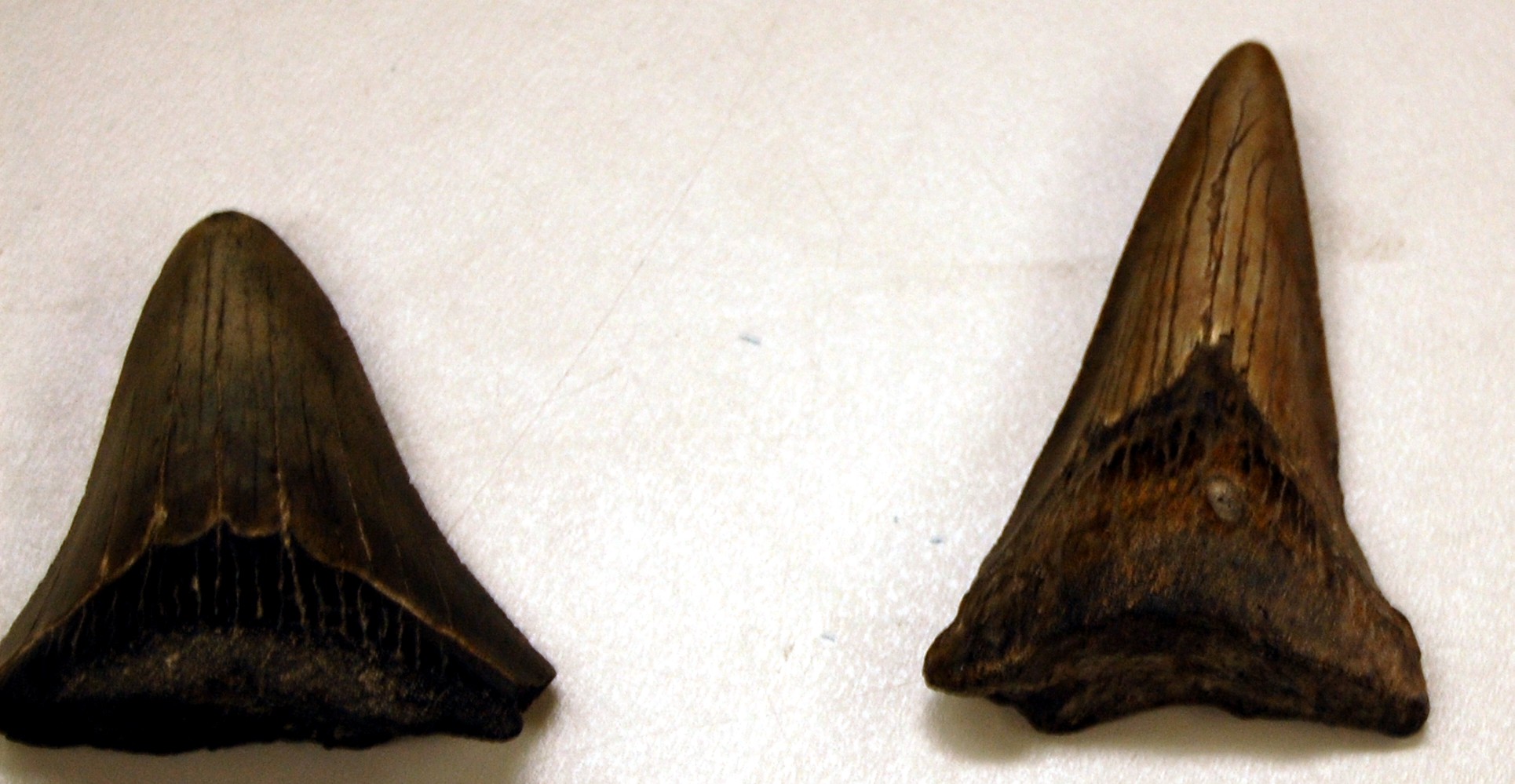
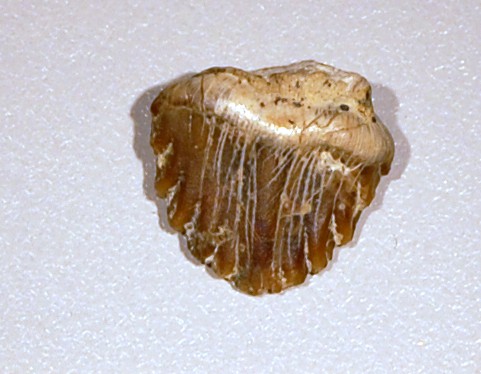
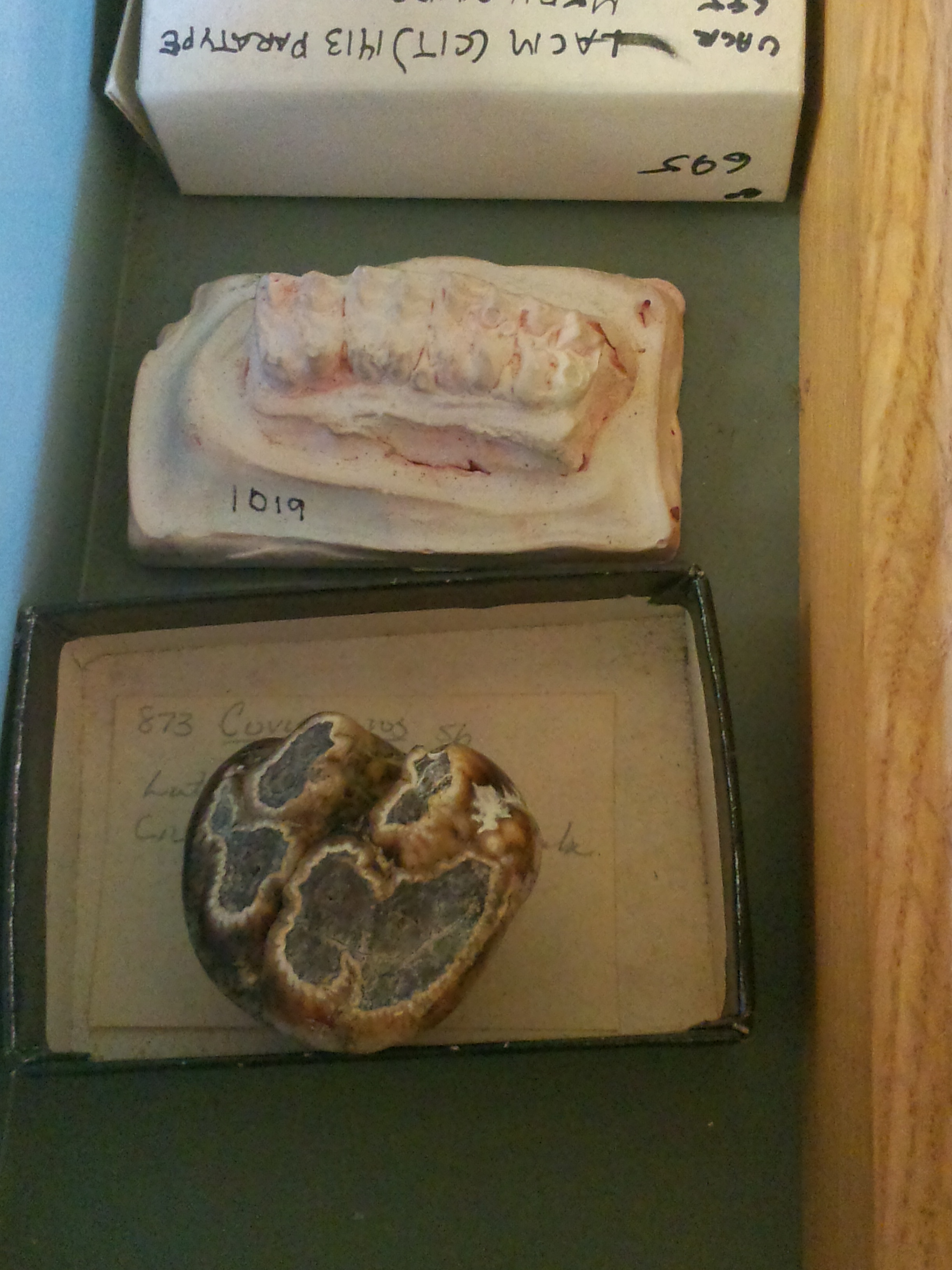
Want something with a bite to it? How about some teeth? Like Megalodon teeth, and a nodosaurid dinosaur, and how about the tooth of a giant ground sloth? What about primitive horse and rhino teeth?
Lots more to see. Come out and have a look. Bring your fossils and compare.
National Fossil Day in 3 Days
Here are some brachiopods you will see at the National Fossil Day event. They look much like clams, but are unrelated.
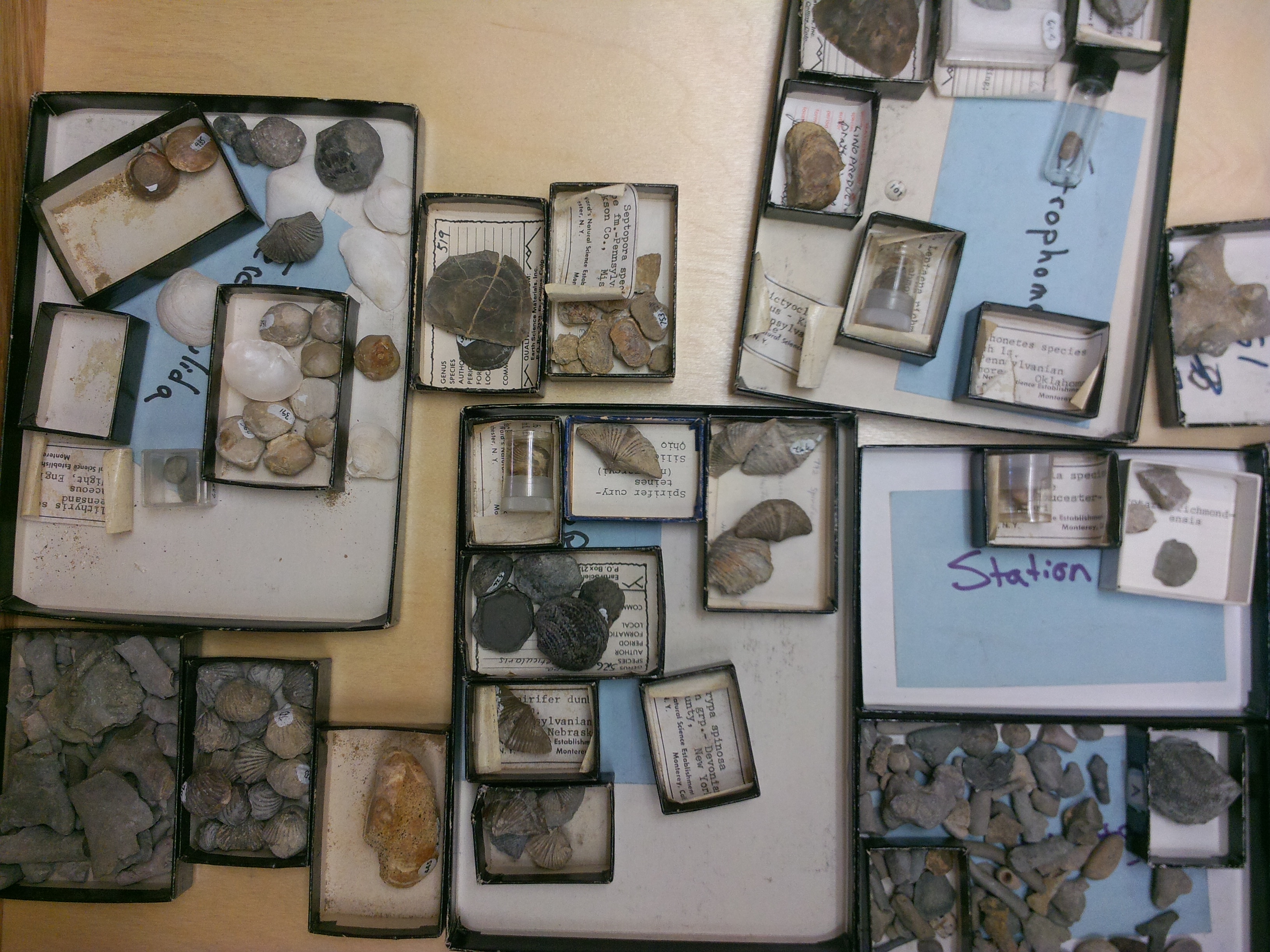
Here are some bryozoans, which look like they should be related to coral, but are thought to be more related to brachiopods because they share the same odd feeding structure.
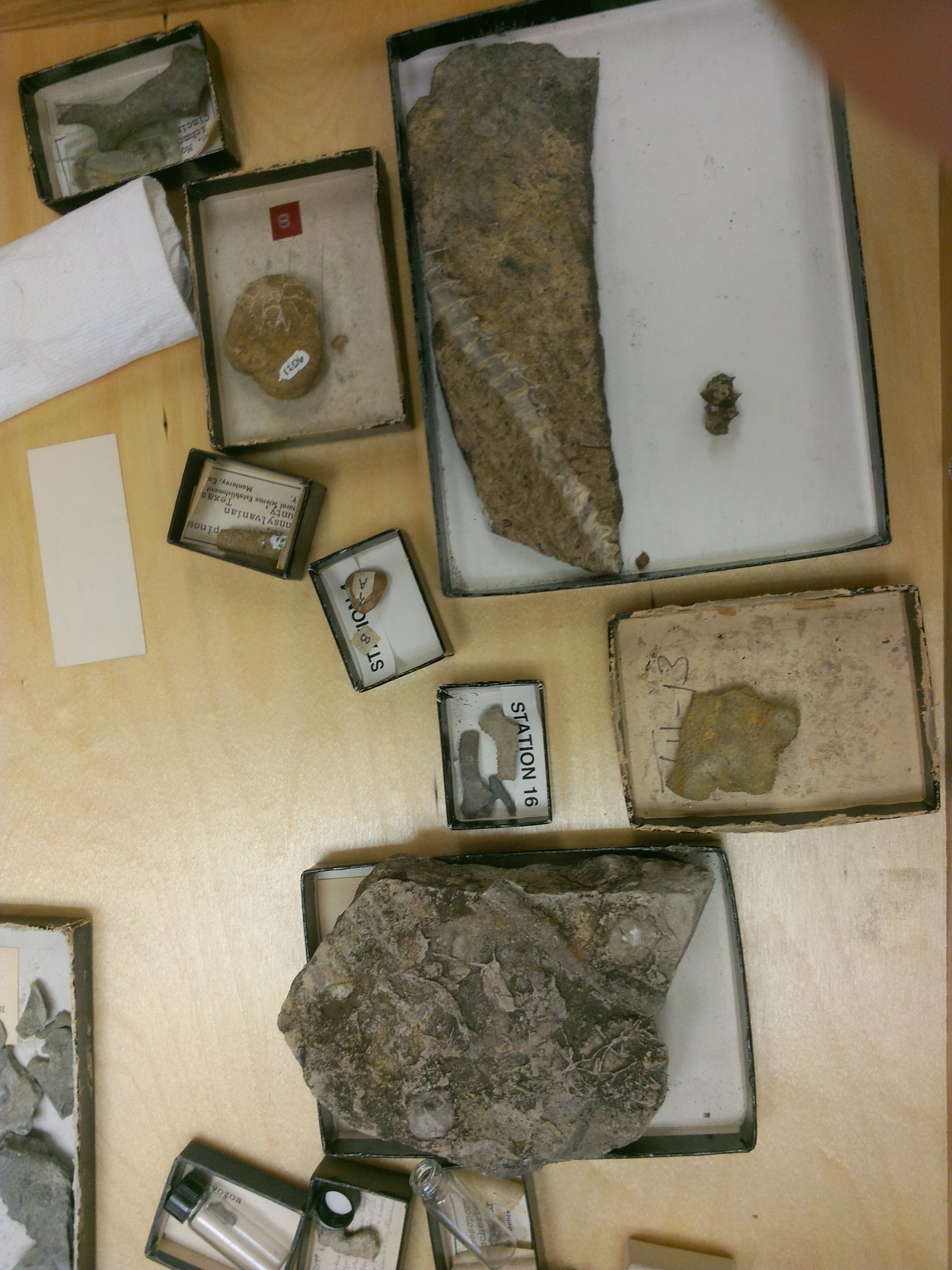
Speaking of corals…
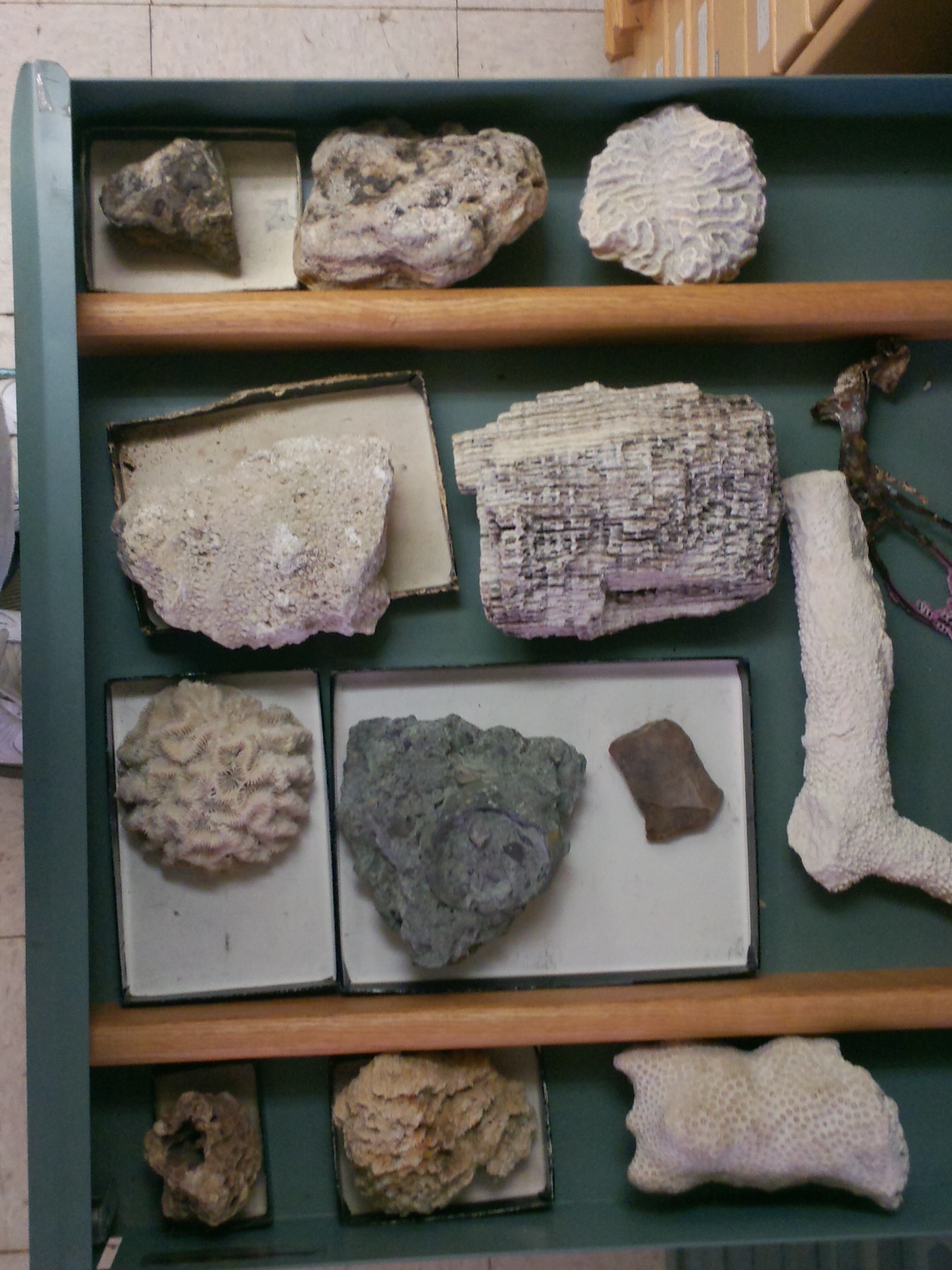
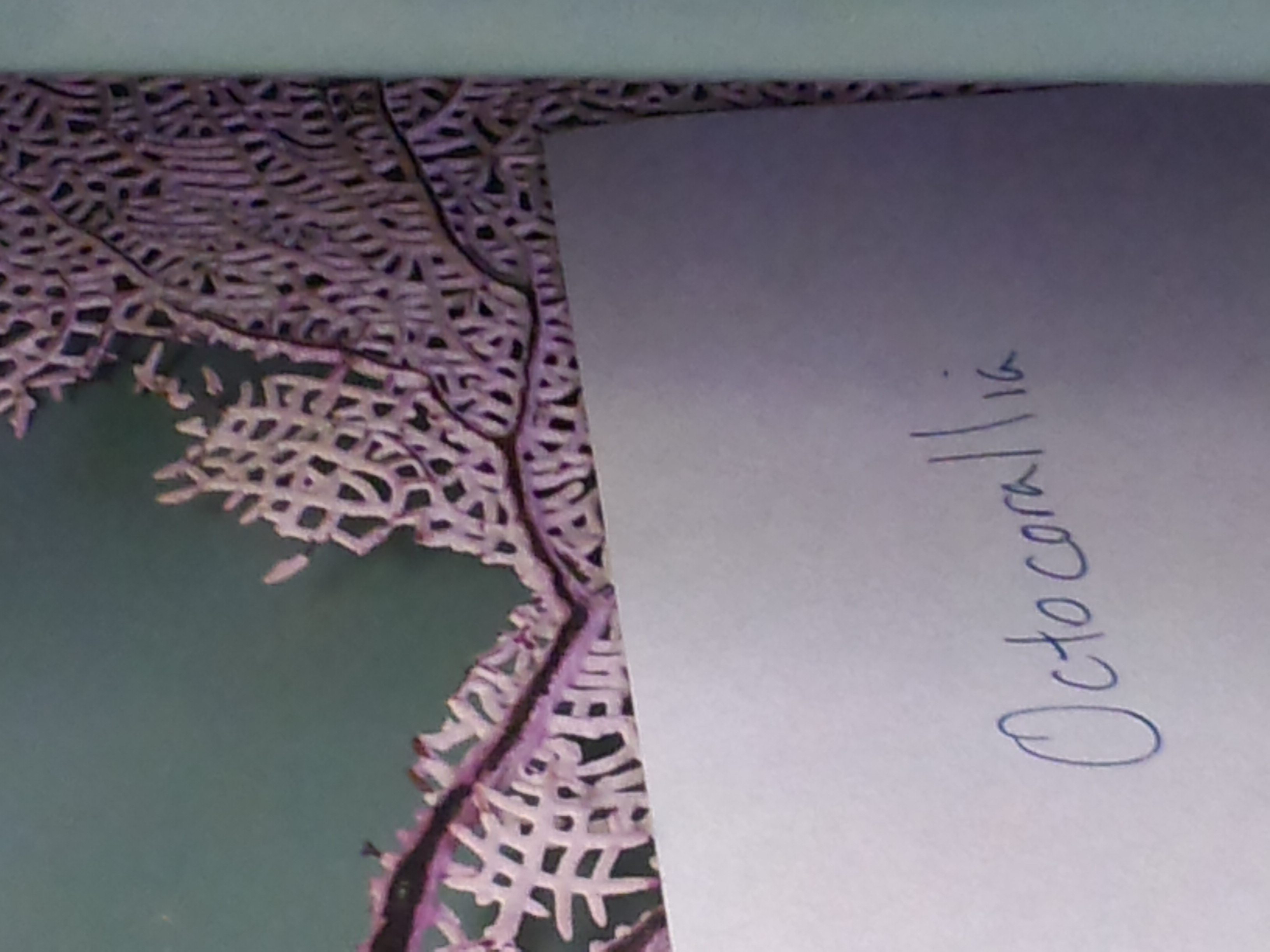
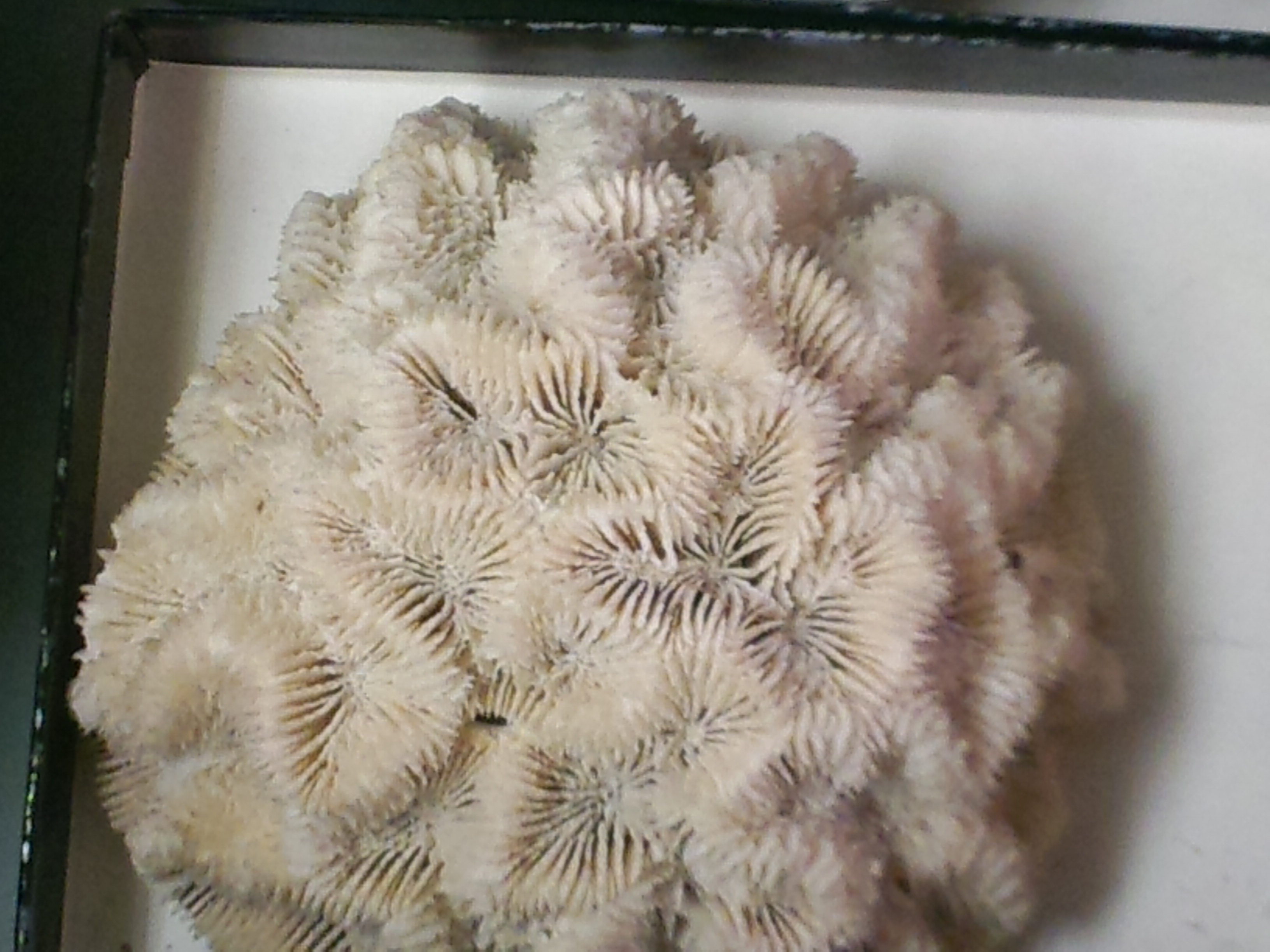
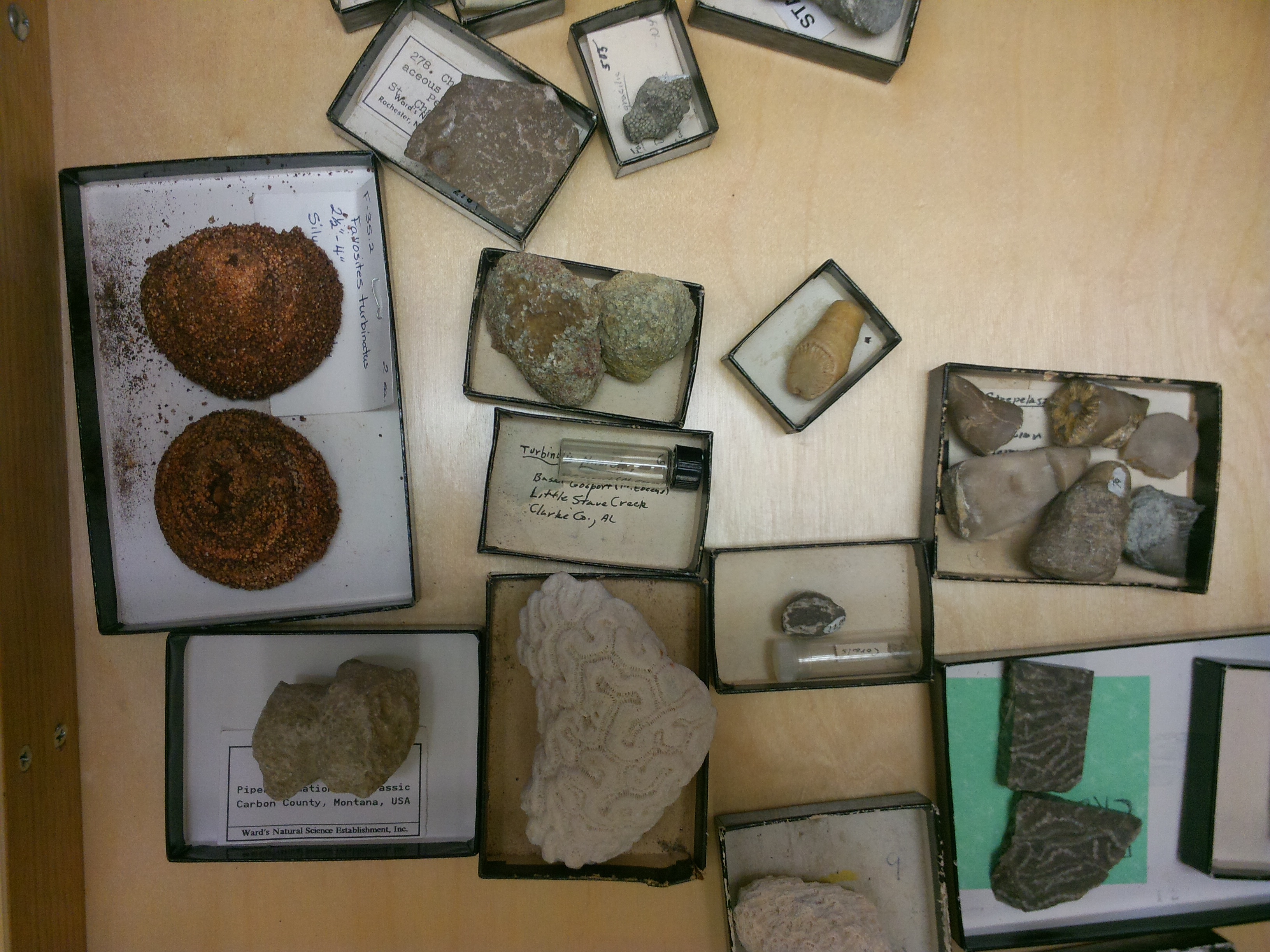
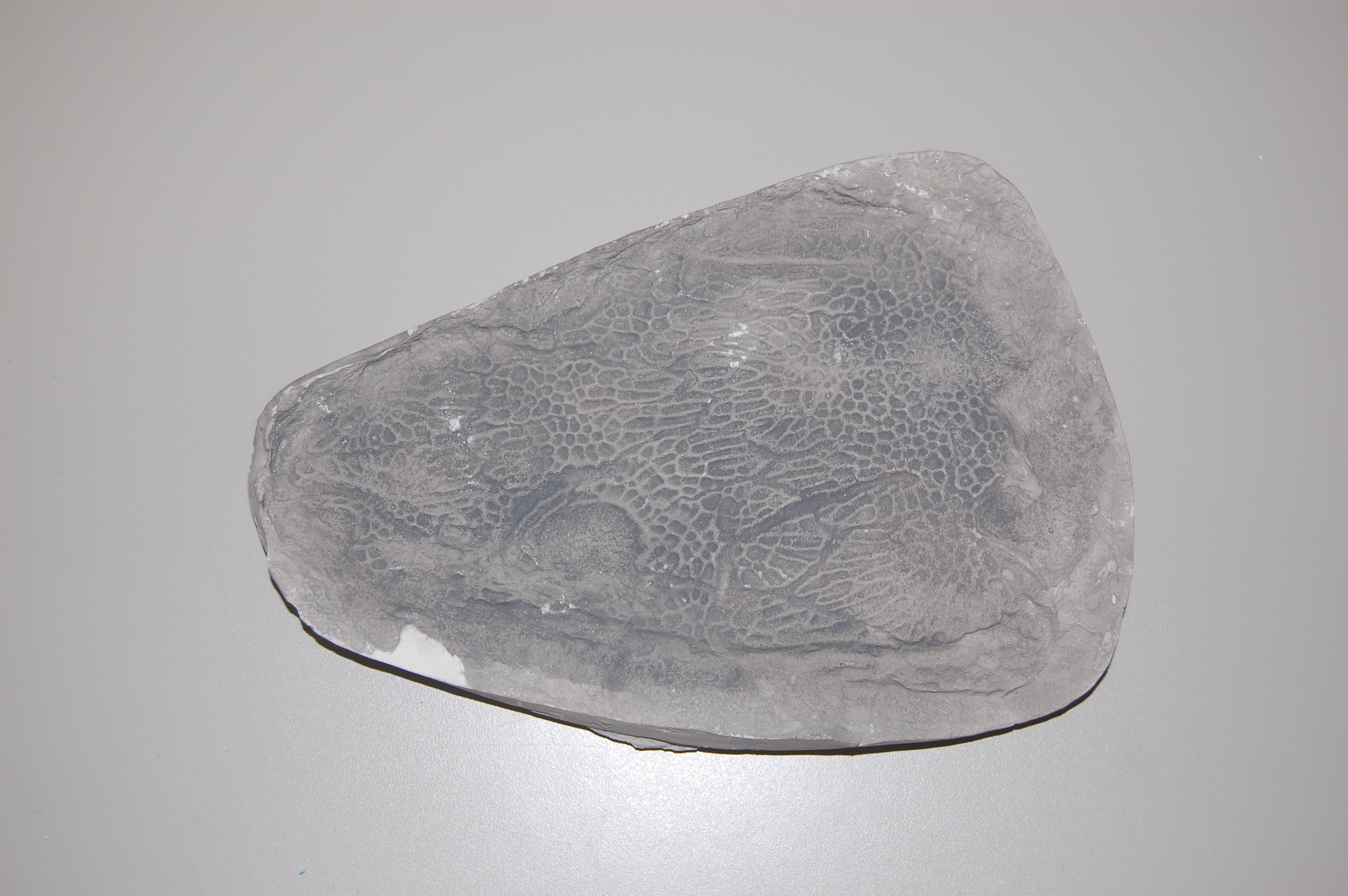
and a sponge, among other things.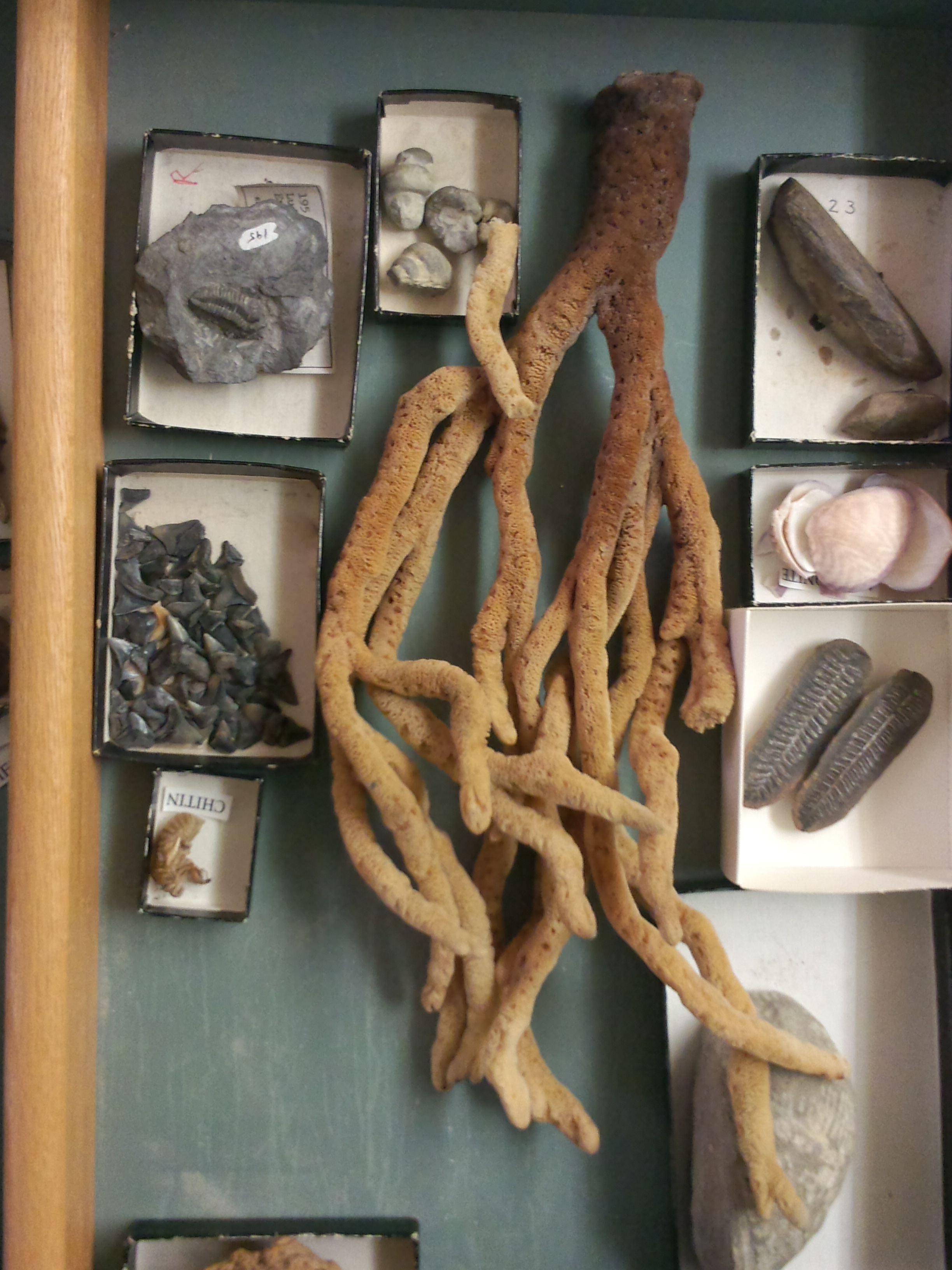
National Fossil Day in 4 Days
One of the common fossils you can find in Arkansas are cephalopods, which are all the squids, octopuses, and in terms of fossils, ammonoids. Arkansas has some very large ones. If one goes to Northeast Arkansas and looks in the Fayetteville Shale, one can find ammonoids with shells several feet long. Here is a preview of some of the fossils you will see Saturday.
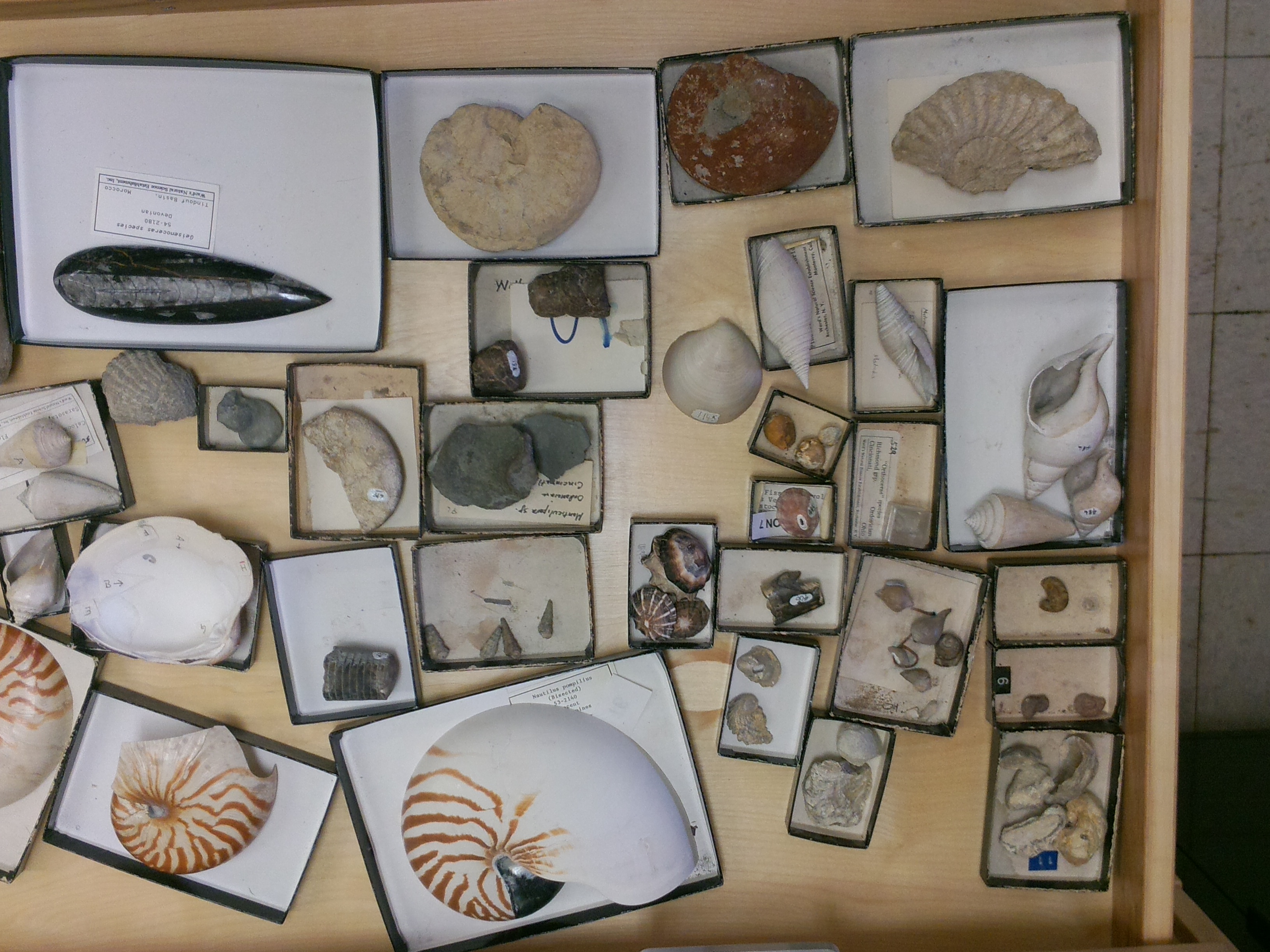
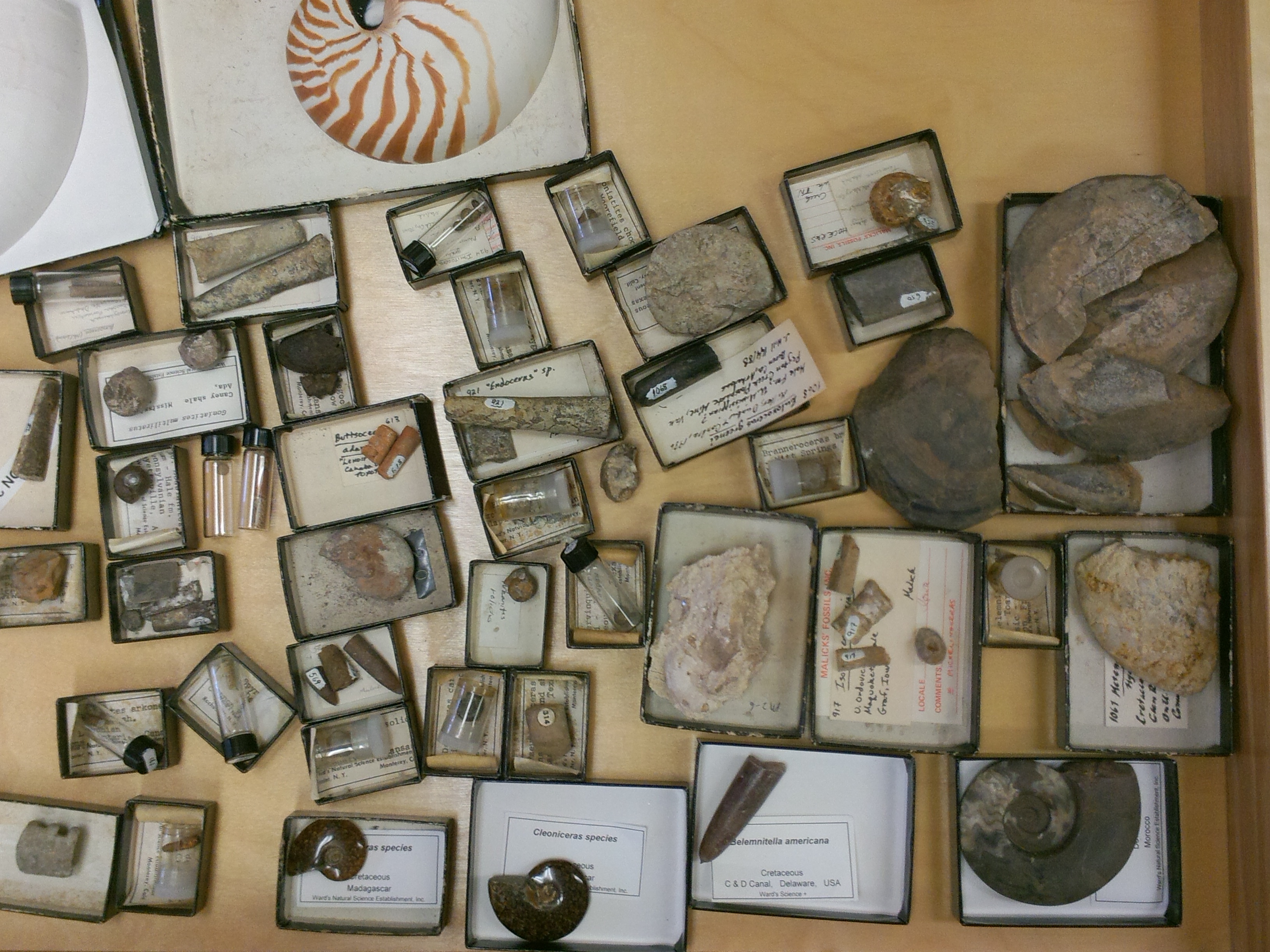 Of course, we can’t forget the other groups of molluscs, the bivalves (clams) and gastropods (snails).
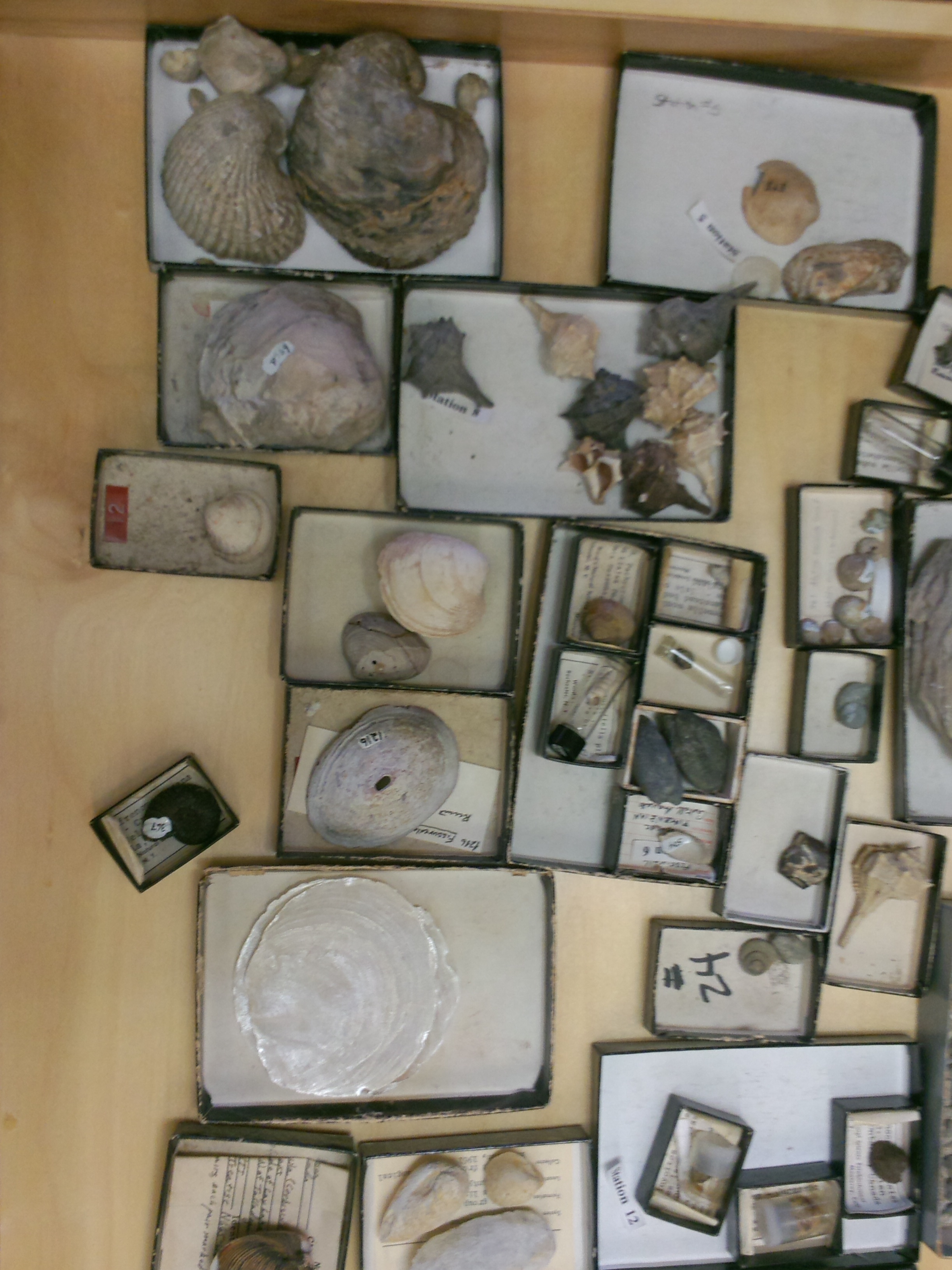
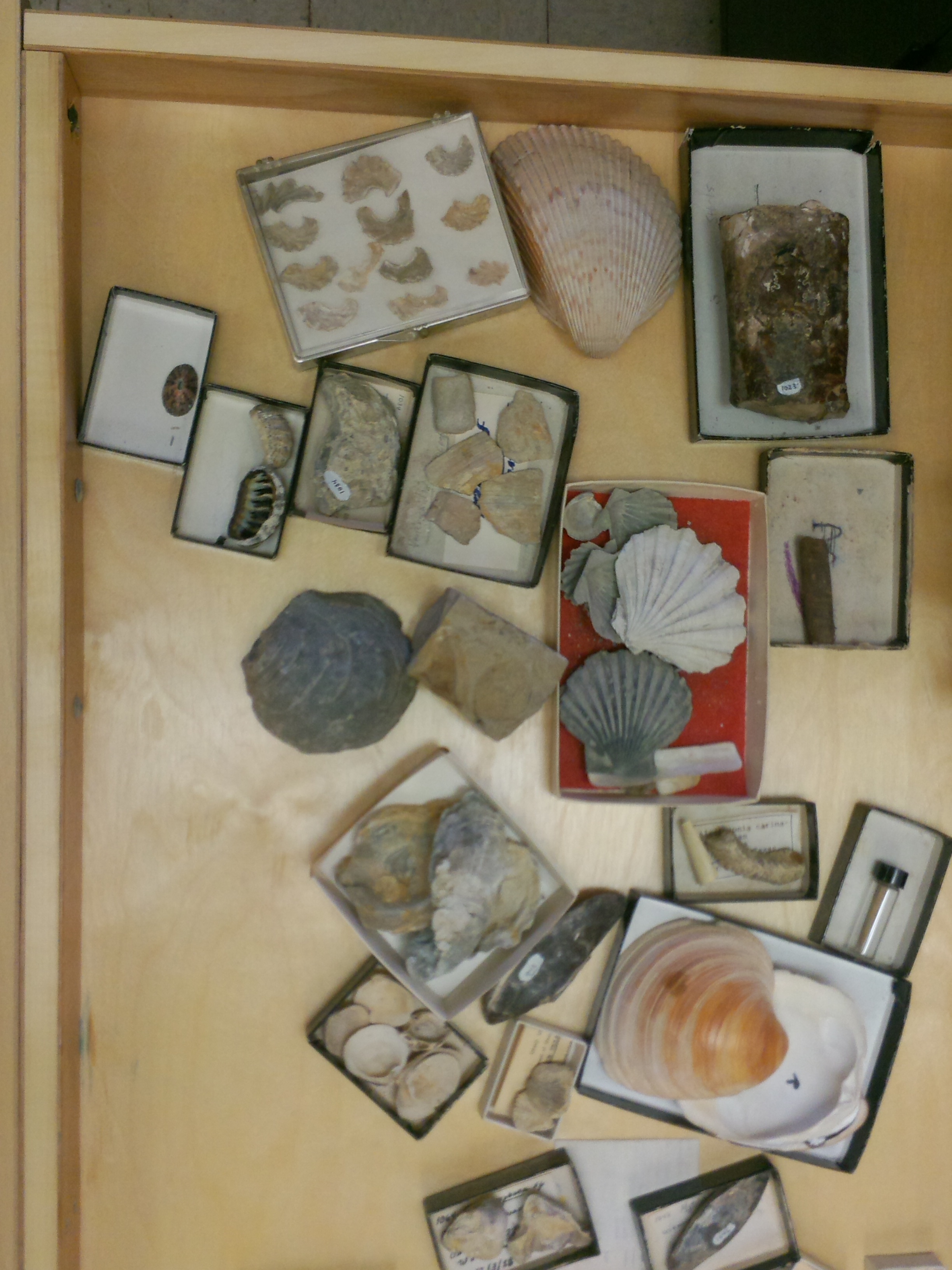
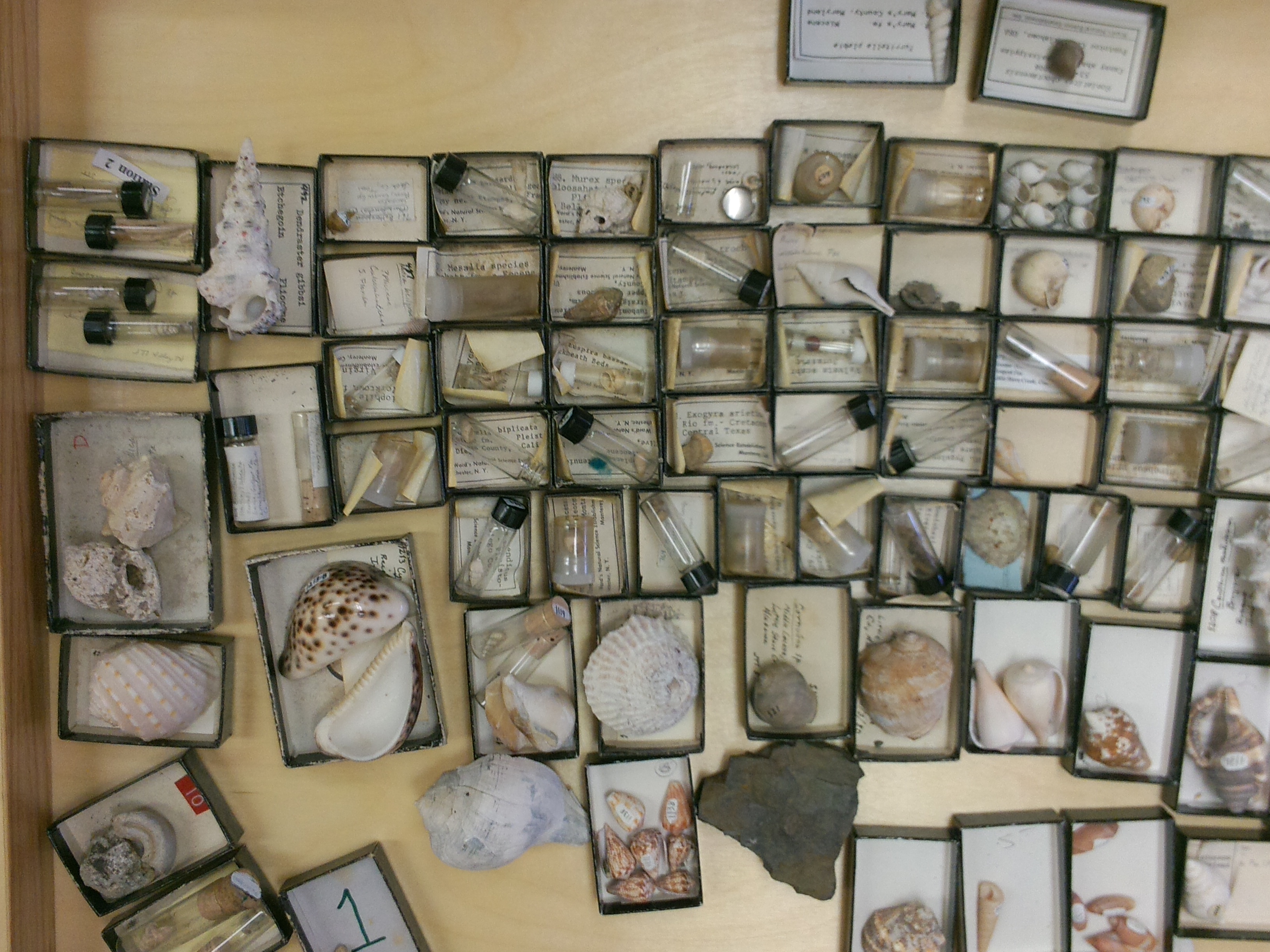
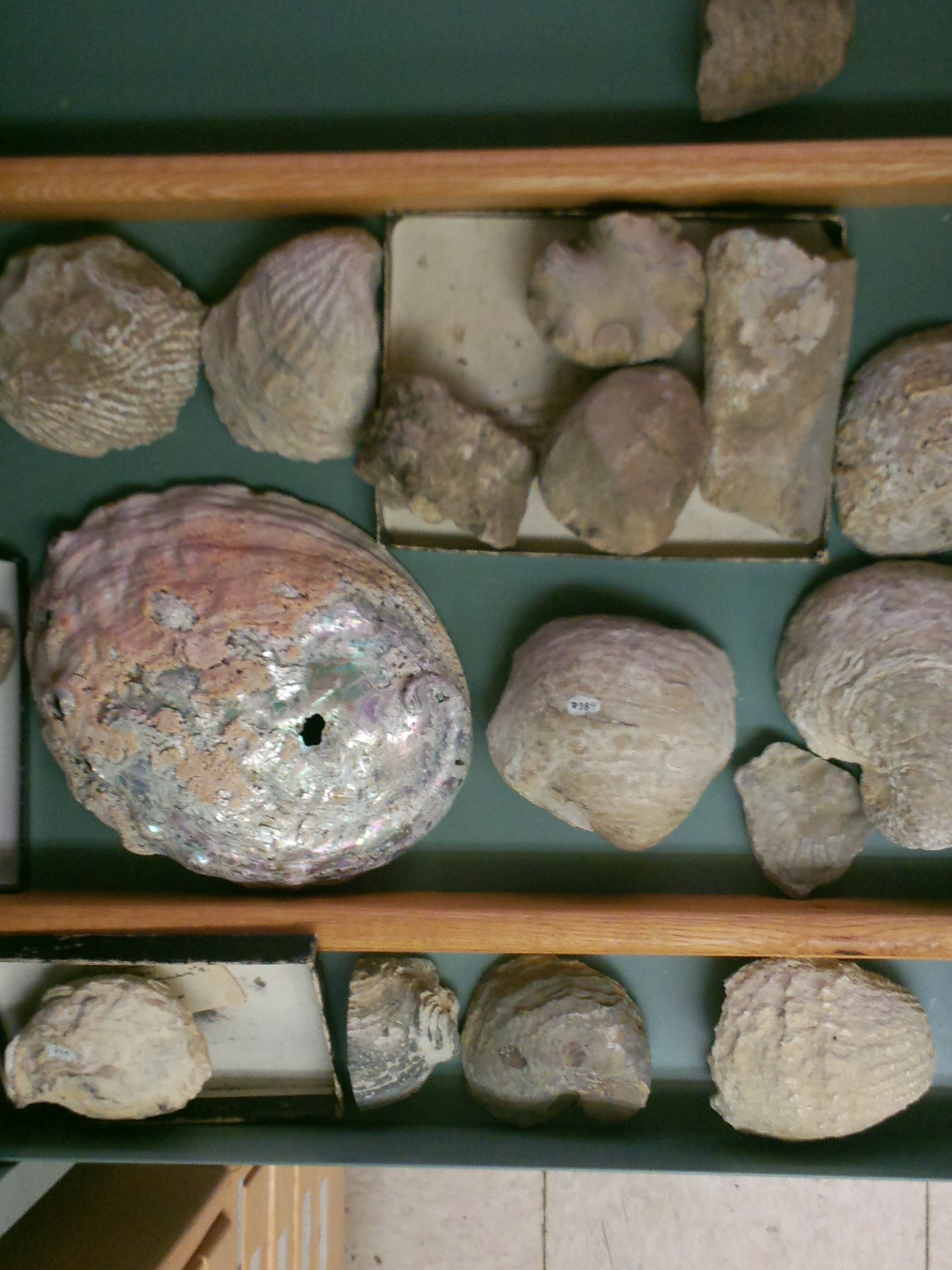
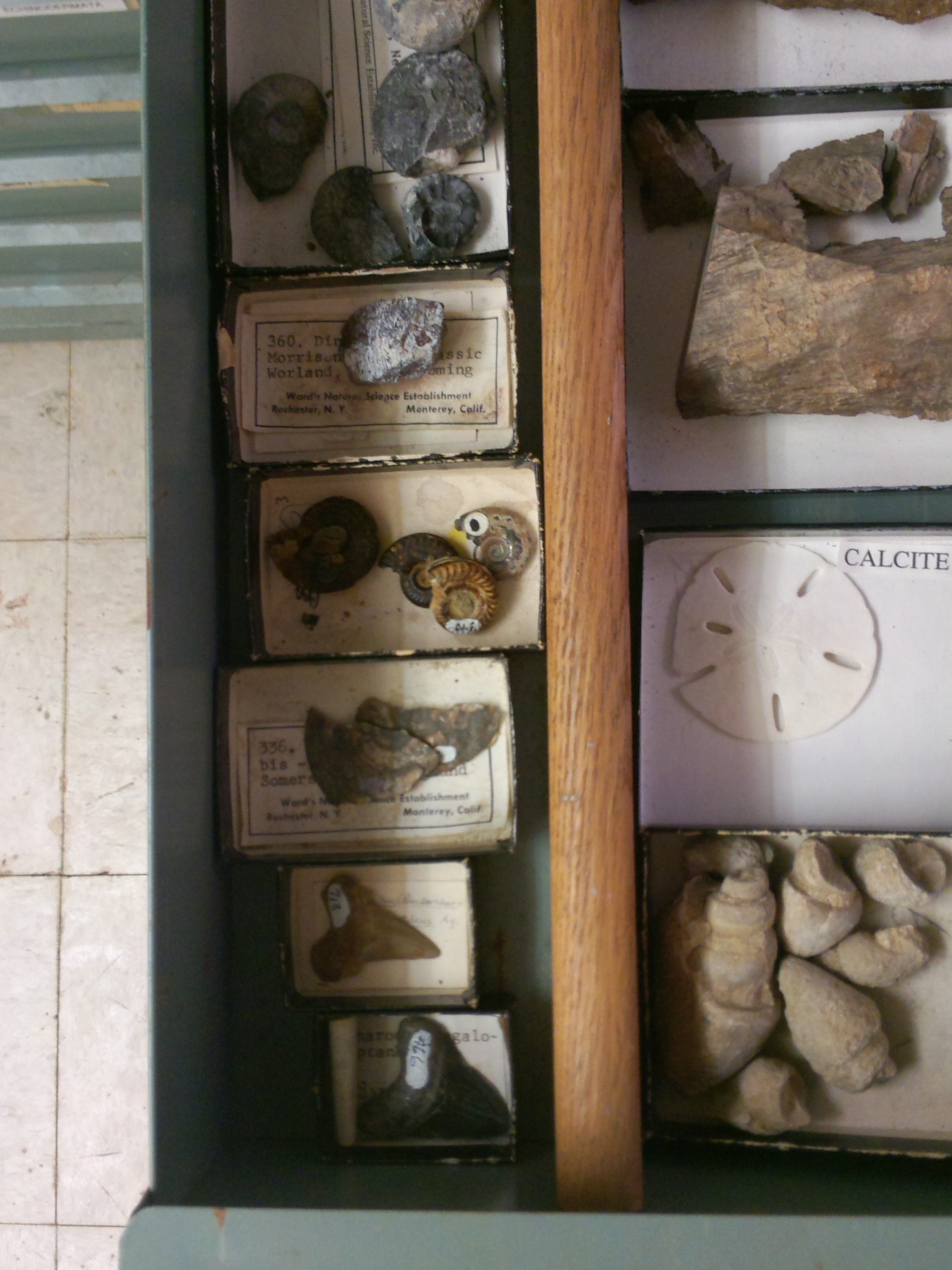
Yes, there are shark teeth and echinoderms in the drawer with the molluscs. These specimens were being used as examples of different types of fossilization.
Come back tomorrow for more fossil previews. Come to the museum to see much, much more.
National Fossil Day Approaches
 National Fossil Day is October 15th, but the Museum of Discovery, in conjunction with the Earth Science and Anthropology departments at the University of Arkansas at Little Rock (UALR), the Arkansas Geological Survey, the Arkansas State University Museum, the Virtual Fossil Museum, and others (including of course, me) will be putting on an exhibit on October 11th. If you are in the neighborhood, please stop in. there is much to do and see for everyone from toddlers to grandparents and professional researchers.
This week I will be sharing a few photos of the collections at the UALR Earth Science Department as a preview of things you will see. We will start with echinoderms today. These include crinoids, sea urchins, starfish, and an array of others.


Fossil Friday, Stepping into the Weekend
So were you able to figure out what Monday’s fossil was? Congratulations to Herman Diaz for not only correctly identifying it, but the relative that lived in Arkansas as well. If you want to see it in person, along with much more, come out to the National Fossil Day event at the Museum of Discovery in Little Rock.
This is the foot of Allosaurus fragilis, which means “different delicate reptile”. It has gone by a lot of names. Depending on the researcher you ask, Antrodemus, Creosaurus, Labrosaurus, Epanterias, and Saurophaganax are all just versions of Allosaurus.
Because of this, it can be difficult to say just how big Allosaurus was. The most famous specimen called “Big Al” is actually on the small side, measuring only about 7.5 m (25 ft), whereas the American Museum of Natural History has a specimen that is almost 10 m (33 ft.). The fossil called Epanterias is a good 12 m (40 ft.). Thus, Allosaurus may have been essentially the same length as Tyrannosaurus rex, although it was more lightly built, so it would not have weighed as much. We should keep in mind though, that every species has a fairly wide range of sizes, so even when we can measure a bunch of living specimens, stating an average size has to come with wide error bars, so take these measurements with a grain of salt.
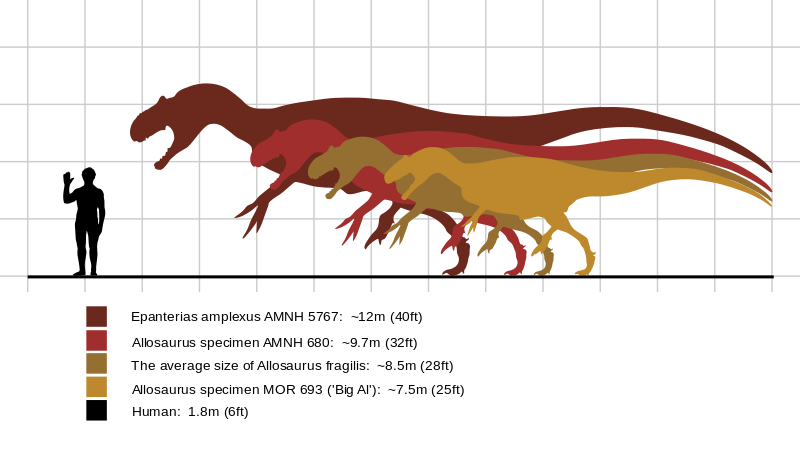
Images adapted from original illustrations by Scott Hartman
Allosaurus itself never lived in Arkansas. But a close relative of it did. Acrocanthosaurus is classified as a Carcharodontosaurid, which is a group that is generally considered to by descended from earlier allosaurs. Allosaurus himself lived in the late Jurassic Period, whereas Acrocanthosaurus lived in the early to middle Cretaceous, so the timing lines up with what we know. No bones of Acrocanthosaurus have ever been found in Arkansas, although they have been found in Texas and Oklahoma. What we do have in Arkansas is their tracks. A large trackway was found in Howard County in 2011. This trackway was mostly footprints of large sauropods such as Sauroposeidon, but it also contained theropod trackways, which were identified as being from Acrocanthosaurus.
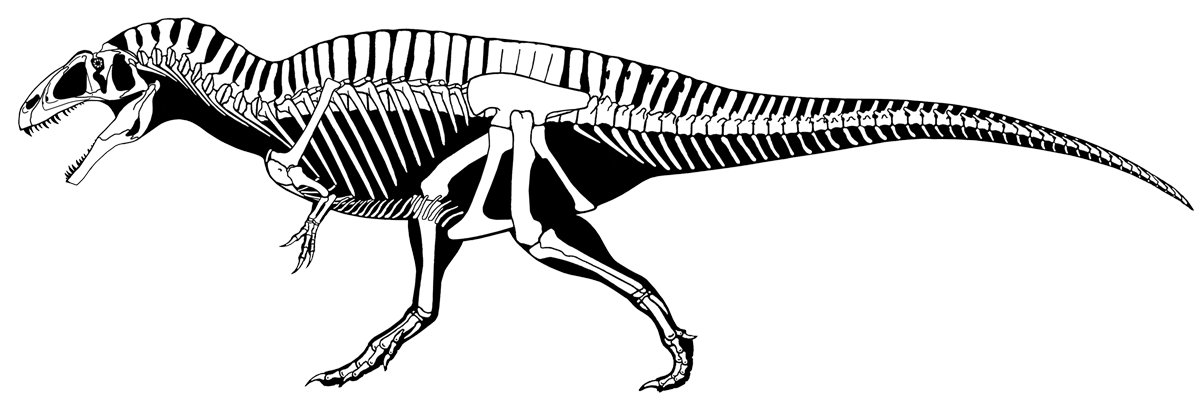
Acrocanthosaurus. By Scott Hartman
Acrocanthosaurus was as big as the biggest allosaurs and was known for unusually long spines on the vertebra, especially over the ribcage. Why did it have the spines? While they weren’t as tall as Spinosaurus, but they were longer than would be necessary for strictly muscle attachment, so the best explanation was that it formed part of a display to make it look bigger and more impressive. It was the biggest predator around, so it likely was not for defense, but to intimidate rivals and impress potential mates.
As the biggest predator around, it preyed upon the main herbivores of the day, which in this case were probably juvenile or elderly sauropods (the healthy adults were likely immune from predation simply on account of size). The skulls were more lightly built than tyrannosaurs, so they probably did not munch through bone like tyrannosaurs. They were apparently more selective in their eating. This would have made them very popular with the scavengers of the time as they would have left more behind.
Mystery Monday
It’s Mystery Monday again. Can you tell what large, but delicate creature to which this belongs? If you would like to see it and a whole bunch more in person, come to the Museum of Discovery in Little Rock on October 11th as we celebrate National Fossil Day.
Mystery Monday
Time for another Mystery Monday fossil. Spend a little time to digest the image, then tell us what you think it is.

Stepping into a Belated Fossil Friday
Were you able to figure out what last Monday’s fossil was? It is on display at Mid-America Museum in Hot Springs, AR. Ordinarily this would have been posted last Friday, but real life intervened. Apologies for that. Part of what happened was that when I posted the original picture last Monday, I thought I understood the background behind the fossil. It turns out that new research was published in 2013 that changed a lot of the more detailed interpretations. It didn’t change anything of importance to anyone not obsessed with details, but it sent me on a three day search for answers.

What we are looking at here is a foot print of a sauropod. Sauropods were herbivorous, long-necked dinosaurs and were the biggest animals to ever walk the earth, some of them possibly massing 50-80 tons and stretching well over 30 m (100 feet). We can’t say exactly which one made this particular footprint, but we can take a pretty good guess. If you guessed Sauroposeidon, or Astrodon, or Pleurocoelus, or Paluxysaurus, or Astrophocaudia, or Cedarosaurus, you are at least partially correct. These are all titanosaurs, a subgroup of sauropods. But which one we call it is more problematic. It is usually almost impossible to tell exactly which species made a particular track and in this case, it gets even harder because there isn’t a lot of agreement over which names are even valid.

 Before we get into that morass, what is a titanosaur anyway? Titanosaurs have been in the news recently with the discovery of Dreadnoughtus. Most people are familiar with Diplodocus and Brachiosaurus, the two iconic sauropods. These two dinosaurs are the best known representatives of the two main groups of sauropods, with many species in each group. Diplodocus had shorter front legs than back legs and was relatively thin with a long, whip-like tail. It’s head was small and elongate, with simple, peg-like teeth in the front of the jaws. Brachiosaurus had longer legs in front than in back and was stockier, with a shorter, stubbier tail. It’s head was larger, with spoon-shaped teeth. Titanosaurs had front legs that were roughly the same length as the back legs, with a relatively whip-like tail like Diplodocus, although not thought to be as long. The heads looked like Brachiosaurus, but more elongate. Some had teeth like Diplodocus, some like Brachiosaurus. Basically, if you try to envision an intermediate form between Brachiosaurus and Diplodocus, you would wind up with something that looked like a titanosaur, which is rather interesting because all the studies trying to figure out their relationships place titanosaurs as much more closely related to brachiosaurs than to diplodocids. In fact, titanosaurs likely evolved from early brachiosaurids, which means that all the characteristics that make them look sort of like diplodocids are examples of convergent evolution, if the hypotheses about their relationships are correct.

The titanosaur Argentinosaurus. Wikipedia
What’s in a name?
Now that we know basically what we are looking at, what do we call the one which may have made this track? That is an excellent question. Two different trackways have been found in Arkansas, both in a commercial quarry in Howard County. They were fantastic finds, with thousands of tracks (5-10,000 tracks in the first trackway alone), placing them among the biggest dinosaur trackways ever found. Unfortunately, other than a few tracks that were spared, they no longer exist as they were destroyed by the quarry operations. That is a sad loss for paleontology, but in defense of the quarry owners, the tracks were found on private land and the owners had no legal requirement to tell anyone about them at all, they are running a business after all. They allowed scientists to study the trackways and in the case of the second trackway, they approached scientists at the University of Arkansas at Fayetteville about the tracks on their own initiative, giving them the opportunity to study the tracks before they were destroyed. As a result, careful maps were drawn, some tracks were removed and others were saved as casts. So the trackways themselves may be gone, but the knowledge of them is still with us and in the public domain.
The tracks were initially described as being from either Astrodon or Pleurocoelus, based on the fact that fossils from these dinosaurs have been identified in Oklahoma in rock units called the Antlers Formation, which is correlated with the Trinity Formation in southwest Arkansas. However, some researchers have concluded that the material upon which these names are based can not be reliably distinguished from any other titanosaur, so the names are what is called nomen dubium, literally dubious names. Pleuocoelus became what is commonly referred to as a junk taxon, which are used as a waste basket for material not identifiable as something else. In this case, when people found bits of a titanosaur in the southern United States they couldn’t identify, they said, it’s um…uh…Pleurocoelus? Pleurocoelus! Yeah! That’s the ticket! In 2013, Michael D’Emic published his research in which he found that part of the material identified as Pleurocoelus are really from two different sauropods called Cedarosaurus and Astrocaudia, and other parts are from a Texan sauropod called Paluxysaurus, leaving other bits unidentifiable as anything other than indeterminant titanosaur. Additionally, he found that Paluxysaurus was simply a juvenile form of Sauroposeidon, a giant sauropod known from four huge cervical (neck) vertebrae found in Oklahoma. So in conclusion, what can we say about the tracks? They were made by a titanosaurid sauropod.
Life’s a Beach
The first trackway was found by Jeff Pittman in 1983 while he was working in the quarry for his master’s degree at Southern Methodist University (SMU). The second set was found in 2011 by quarry workers, who brought it to the attention of Stephen Boss, a geologist at the University of Arkansas at Fayetteville. The tracks in the first trackway were 12-24″ across and were interpreted as being from from adult sauropods. The other trackway was more diverse, with tridactyl (three-toed) footprints attributed to the giant carnivorous dinosaur Acrocanthosaurus, as well as tetradactyl (four-toed) tracks which may have been made by a crocodilian of some sort. The pictures below are of the first trackway, taken by David Gillette, and can be found at his site discussing Seismosaurus.


The rocks in which both of the trackways were found is in what is called the DeQueen Limestone, a subunit of the Trinity Formation. These rocks were laid down in the Early Cretaceous about 115 to 120 million years ago. At the time, the shore of the Gulf Coast went through Arkansas, so much of southwest Arkansas was underwater. The DeQueen Limestome has thin layers of sandy limestone, many of which are quite fossiliferous, with oyster shells in abundance. There are also layers of limy clay and gypsum, indicating the air was fairly hot and dry. Stephen Boss likens the environment at the time to be similar to the Persian Gulf of today. So what we have is the coast of a very warm shallow sea. The dinosaurs appear to have been using the area as part of a migratory pathway. So while no bones of these dinosaurs have been found in Arkansas yet, we know they were here, so keep an eye out when you are fossil-hunting in southwest Arkansas. Who knows, you might find something bigger than you imagine.

Depiction of the environment during the formation of the trackway. Mark Hallett. http://www.columbia.edu/dlc/cup/gillette/gillette19.html

 paleoaerie